

After three years of testing, tweaking, and occasionally losing money with crypto trading bots, I can tell you one thing with absolute certainty: the strategy you choose matters far more than the platform you run it on. I've seen traders throw thousands at the most sophisticated bot on the market and lose it all because they picked the wrong approach for the wrong market. And I've seen beginners with $500 on a basic grid bot quietly compound their way to impressive returns.
This guide isn't a textbook overview. It's what I've actually learned — sometimes the hard way — about the seven crypto trading bot strategies that consistently deliver results in 2026. I'll tell you when each one works, when it doesn't, and the mistakes I made so you don't have to.
What Are Crypto Trading Bot Strategies, Really?
Let's cut through the marketing noise. A crypto trading bot strategy is simply a set of rules you define — and a machine executes. That's it. The bot doesn't "think." It doesn't "predict the market." It follows your instructions faster and more consistently than you ever could at 3 AM when Bitcoin decides to drop 8%.

The real advantage isn't intelligence — it's discipline. I used to sit in front of charts for hours, second-guessing entries, panic-selling dips, and chasing pumps. The day I automated my first strategy, my returns didn't skyrocket. But they became consistent. And consistency, in this market, is everything.
In 2026, the best automated trading strategies combine technical analysis with risk management rules that keep you in the game even when the market turns ugly. Here's what's actually working.
1. Grid Trading: The Silent Money Printer in Sideways Markets
Grid trading was the first strategy I ever automated, and honestly, it changed how I think about crypto entirely. Most traders obsess over predicting direction — will Bitcoin go up or down? Grid trading doesn't care. It profits from movement itself.
Here's the concept in plain terms: imagine Bitcoin is bouncing between $58,000 and $62,000. You set up a grid of buy orders every $200 below the current price and sell orders every $200 above. Every time the price dips to $59,800, you buy. When it bounces to $60,200, you sell. That $400 spread, multiplied across dozens of grid levels running 24/7, adds up fast.
I ran a grid bot on ETH/USDT during the sideways market of late 2025. Over eight weeks, while most traders were bored and complaining about "no action," my bot executed over 400 small trades and returned about 12%. Nothing flashy — but completely hands-off.
Where it fails: grid trading gets destroyed by strong, sustained trends. If the price breaks below your grid and keeps falling, you're left holding bags at every level. I learned this the hard way during a sudden 20% BTC correction — my grid was too tight, and I ate significant unrealized losses before it recovered. The lesson? Always set your grid boundaries wider than you think you need, and never grid trade with money you can't afford to sit on for weeks.
Best Platform for Grid Trading: Pionex
I've tested grid bots on several platforms, but Pionex remains my top recommendation for one simple reason: their grid bots are built directly into the exchange with just 0.05% fees. No API keys to configure, no third-party connections to break. Their AI parameter suggestions are surprisingly solid for beginners — I'd say they get the range right about 70% of the time. Start there, then tweak as you learn.
2. Dollar Cost Averaging (DCA): The Strategy That Saved My Portfolio
I'll be honest — I used to think DCA bots were boring. "Just buying regularly? Where's the edge?" Then came the crash of early 2025, and DCA became the only strategy in my arsenal that not only survived but came out ahead.
A DCA bot doesn't try to time the market. Instead, it places a base order and then sets up "safety orders" at predetermined price drops. Let's say you start with a $100 buy on SOL at $180. If the price drops 3%, the bot buys another $150. If it drops another 3%, it buys $200. Each purchase lowers your average cost, and when the price eventually recovers even a small percentage, you take profit on the entire position.

Here's a real example from my own trading: during a rough week where SOL dropped from $185 to $155, my DCA bot placed 6 safety orders, bringing my average entry down to about $165. When the price bounced to just $170 — still well below where I first bought — the bot closed the deal at 3% profit. That entire cycle took five days, and I didn't touch a single button.
The beauty of DCA is that it loves volatility. The choppier and scarier the market looks, the better it performs. While everyone else is panic-selling, your bot is calmly accumulating at better and better prices.
The trap to avoid: don't set too many safety orders with too much capital on a single pair. If a coin drops 50% and your bot keeps buying all the way down, you can end up with your entire portfolio locked in a single losing position. I now limit each DCA deal to a maximum of 5% of my total capital, no exceptions.
Best Platform for DCA: 3Commas
3Commas wrote the book on DCA bots. Their safety order configuration is the most granular I've found — you can set custom deviation percentages, volume scales, and multiple take-profit targets with trailing. The paper trading mode is genuinely useful; I spent two weeks testing DCA settings on it before going live, and it saved me from at least one configuration that would have blown up.
3. Copy Trading: Standing on the Shoulders of Better Traders
Copy trading gets a bad reputation in some circles, and I understand why — the idea of blindly following someone else feels lazy. But here's what I've found after a year of experimenting with it: used correctly, copy trading is one of the smartest things a newer trader can do.
The concept is straightforward: you pick a trader with a verified track record, allocate a portion of your funds, and your account automatically mirrors their trades in real time. When they buy ETH, you buy ETH. When they take profit, you take profit. Your trades are proportionally scaled to your account size.
I started copy trading when I wanted exposure to altcoin markets that I didn't have time to research. I found a trader on Cryptohopper's marketplace who had a 14-month track record with 67% win rate and a max drawdown of 11%. I allocated $2,000 and followed for three months. The result? About 18% return with minimal stress.
The critical mistake: don't just look at total returns when selecting traders to copy. I once followed a trader showing 200% returns — turns out they were taking insane leverage risks, and their drawdowns were 40%+. Within two weeks, I was down 25%. Now I prioritize low max drawdown and consistency over raw performance. A trader making 5% monthly with 8% max drawdown is infinitely better than one making 15% monthly with 35% drawdowns.
Best Platform for Copy Trading: Cryptohopper
Cryptohopper's signal marketplace is the most transparent I've used. Every trader has detailed performance stats — win rate, average trade duration, max drawdown, and subscriber count. You can also layer your own risk management on top of copied trades, which is something most platforms don't offer. I always set my own stop-loss even when copying someone else.
4. Arbitrage: Small Edges, Consistent Returns
Arbitrage is the closest thing to "free money" in crypto — and no, it's not as easy as it sounds. The idea is simple: the same coin trades at slightly different prices on different exchanges, and you profit from the difference. Buy Bitcoin at $60,100 on Exchange A, sell at $60,250 on Exchange B, pocket the $150 minus fees.
In practice, pure cross-exchange arbitrage has gotten much harder in 2026 as markets have become more efficient. Where I've found more consistent opportunities is in funding rate arbitrage. Here's how it works: perpetual futures contracts have a "funding rate" that long traders pay to short traders (or vice versa) every 8 hours. When the funding rate is strongly positive, you can buy the spot asset and short the perpetual, collecting the funding rate while staying market-neutral. During high-hype periods, I've seen funding rates hit 0.1% per 8 hours — that's potentially 0.3% daily, or roughly 9% monthly, with minimal directional risk.
The hidden costs: fees and slippage eat into arbitrage profits fast. I once ran what I thought was a profitable triangular arbitrage strategy (trading BTC→ETH→USDT→BTC to exploit conversion inefficiencies), only to realize that after accounting for three sets of trading fees, I was actually losing $2-3 per cycle. Arbitrage only works at scale, and you need to be obsessive about fee calculations before deploying real capital.
Risk Level: Low to Medium
Arbitrage is fundamentally lower-risk because you're not betting on direction. But exchange risks (withdrawal delays, downtime during volatile periods) can turn a theoretical profit into an actual loss. Always keep balances pre-funded on both sides.
5. Trend Following: Riding the Wave When the Market Picks a Direction
Trend following is the strategy that makes the most money when it works — and frustrates you the most when it doesn't. The principle is deceptively simple: when the market starts moving in one direction, get on board and ride it until the trend reverses.
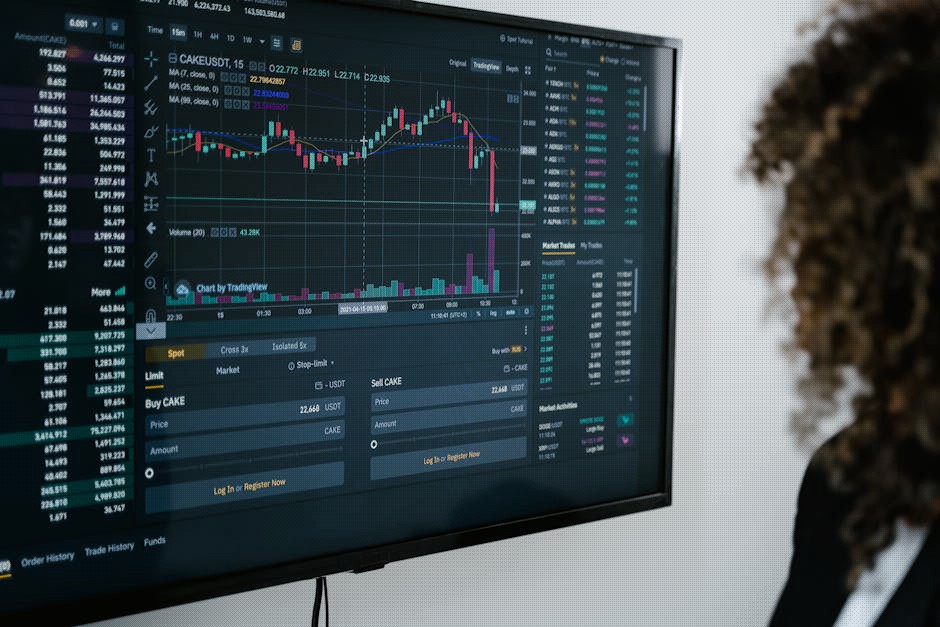
My favorite setup uses a combination of two exponential moving averages (the 21 EMA and 55 EMA). When the fast EMA crosses above the slow one, the bot enters a long position. When it crosses back below, it exits. It sounds almost too simple, but during Bitcoin's rally from $52K to $71K in late 2025, this exact setup captured about 80% of the move while I was literally on vacation.
The key to trend following is accepting that you'll be wrong often. In my experience, roughly 60% of trend signals turn out to be false breakouts, and you'll take small losses on those. But the 40% that work? Those can return 10x, 20x what you lost on the false signals. It's the one strategy where your win rate doesn't matter — your win size does.
The painful reality: trend following is absolutely miserable in choppy, sideways markets. During Q3 2025, I had a trend bot that got whipsawed seven times in a row — each time entering on a breakout, only for the price to reverse immediately. Seven small losses in three weeks. It took every ounce of discipline not to turn it off, but I knew from backtesting that this was normal and the next real trend would more than make up for it. It did.
Practical tip: add a volatility filter. I use the Average True Range (ATR) indicator — if the ATR is below a certain threshold, my bot doesn't trade, period. This alone cut my false signals by about 30%.
6. Mean Reversion: Buying the Fear, Selling the Greed
Mean reversion is based on a statistical reality that holds remarkably well in crypto: prices that deviate far from their average tend to snap back. Think of it like a rubber band — the further you stretch it, the harder it snaps back.
In practice, I use Bollinger Bands with a 20-period setting. When the price drops below the lower band by more than one standard deviation — meaning it's statistically oversold — the bot buys. When it returns to the middle band (the mean), the bot sells. Simple, mechanical, and surprisingly profitable on established pairs like BTC/USDT and ETH/USDT.
Here's a concrete example: in February 2026, Ethereum dropped sharply from $3,400 to $3,050 on some regulatory FUD. My mean reversion bot triggered a buy at $3,080, well below the lower Bollinger Band. Three days later, the panic subsided and ETH recovered to $3,280. The bot sold at $3,260 (near the moving average), banking about 5.8% on that single trade. The whole thing happened automatically while I was focused on other work.
When this strategy breaks: mean reversion is essentially betting that "this time isn't different." But sometimes it is different. During a genuine trend change — like a major exchange hack or regulatory ban — prices don't revert to the mean. They establish a new mean. I lost money trying to mean-revert during the LUNA collapse, buying every dip because "it has to bounce back." It didn't. Now I always combine mean reversion with a hard stop-loss at 2x the normal deviation. If the rubber band snaps, I want out.
Risk Level: Medium
Mean reversion works best on large-cap coins with deep liquidity. Don't try this on small-cap altcoins — they can stay "oversold" for months or go to zero entirely.
7. Signal-Based Trading: Outsourcing the Analysis
Signal-based trading is what happens when you combine external intelligence — whether from professional analysts, algorithmic models, or sentiment tools — with automated execution. You subscribe to a signal provider, and when they say "buy BTC at $59,800, target $62,000, stop at $58,500," your bot executes it instantly.
I was skeptical about signal-based trading until I tried a well-reviewed technical analysis provider on Cryptohopper. Over four months, their signals had a 62% win rate with an average reward-to-risk ratio of 1.8:1. Nothing spectacular on paper, but the math works beautifully: for every dollar risked on losing trades, winning trades returned $1.80. That compounded to about 22% over those four months.
What makes signal-based trading interesting in 2026 is the emergence of AI-driven sentiment signals. These systems scan Twitter, Reddit, and on-chain data to detect unusual activity before it shows up on price charts. I've seen signals fire 15-30 minutes before a major move based on whale wallet movements — that kind of edge is nearly impossible to replicate manually.
The danger: the signal space is full of scams. I've subscribed to providers who showed incredible backtested results but fell apart in live trading. Always demand at least 6 months of verified, forward-tested performance. If they only show backtests, walk away. And diversify — I never allocate more than 15% of my portfolio to any single signal provider.
Best Platform for Signal Trading: Cryptohopper
Cryptohopper's marketplace vets signal providers and displays forward-tested performance data publicly. You can also combine multiple signal sources with custom weighting — for instance, only executing when two out of three providers agree on a direction. That filter alone has improved my results significantly.
Strategy Comparison: Choosing the Right Approach
| Strategy | Risk Level | Best Market | Complexity | Profit Potential | Recommended Platform |
|---|---|---|---|---|---|
| Grid Trading | Medium | Ranging/Sideways | Low | Moderate | Pionex |
| DCA | Low-Medium | Volatile/Bear | Low | Moderate | 3Commas |
| Copy Trading | Medium-High | All Markets | Low | Variable | Cryptohopper |
| Arbitrage | Low-Medium | Volatile | High | Low-Moderate | Various |
| Trend Following | Medium-High | Trending | Medium | High | TradingView Bots |
| Mean Reversion | Medium | Range-bound | Medium | Moderate | Various |
| Signal-Based | Medium-High | All Markets | Medium | High | Cryptohopper |

Risk Management: The Strategy Behind Every Strategy
I've saved the most important section for last, because no strategy matters if your risk management is broken. I learned this lesson with real money, and I want to save you the tuition.
The 2% Rule
Never risk more than 2% of your total portfolio on any single bot or trade setup. This sounds conservative until you do the math: even with 10 consecutive losing trades (which happens more often than you'd think), you've only lost about 18% of your portfolio. You can recover from that. You can't recover from a 50% loss on one bad bet.
Diversify Across Strategies, Not Just Coins
Running three DCA bots on three different coins isn't real diversification — they'll all lose money in a broad market downturn. True diversification means combining strategies that perform well in different conditions: grid trading for sideways markets, trend following for breakouts, and DCA for accumulating during dips. When one strategy struggles, another should be profiting.
Review Weekly, Adjust Monthly
I spend about 30 minutes every Sunday reviewing all my active bots. I check total P&L, individual strategy performance, and whether market conditions have shifted. If a strategy has been underperforming for more than three weeks, I don't panic — but I do investigate whether the market regime has changed. Full parameter adjustments happen monthly, not reactively after a single bad day.
Getting Started: My Honest Advice
If you're just starting out with automated trading strategies, here's what I wish someone had told me three years ago:
- Start with $200 and a grid bot on Pionex. Seriously. Don't overcomplicate it. Pick BTC/USDT, use the AI-recommended parameters, and let it run for two weeks. You'll learn more from watching a real bot execute 50 trades than from reading ten more articles.
- Paper trade your second strategy. Once you understand grid trading, test a DCA bot on 3Commas' demo mode for at least two weeks before going live.
- Never invest more than you can completely lose. I know this sounds like generic advice, but I've watched people put their emergency fund into a bot because "it's automated so it's safe." It's not. Bots remove emotion from execution, not risk from markets.
- Keep a simple spreadsheet. Track every bot's start date, initial capital, current value, and strategy. After three months, you'll have real data about what works for you — not what worked for some influencer on YouTube.
The Future: Where Crypto Bot Strategies Are Heading
The most exciting development I'm watching in 2026 is the integration of AI models that can dynamically switch between strategies based on detected market regimes. Instead of you deciding when to run grid trading versus trend following, the bot detects the current market phase and adapts automatically. It's still early, but a few platforms are showing promising results.

Cross-chain arbitrage across DeFi protocols is another frontier. As bridges become more reliable, bots that can exploit price differences between Ethereum, Solana, and Layer 2 networks are finding margins that centralized exchanges dried up years ago.
Regulation is also pushing the industry toward more transparency, which is ultimately a good thing. Platforms that survive regulatory scrutiny tend to be the ones that deserve your capital.
My bottom line: There is no single "best" crypto trading bot strategy. The best strategy is the one that matches your market conditions, your risk tolerance, and — most importantly — the one you understand well enough to trust when it's losing money. Because all strategies lose money sometimes. The difference between profitable traders and everyone else is whether they stick to the plan.
Frequently Asked Questions
What is the most profitable crypto trading bot strategy?
In my experience, it depends entirely on the market cycle. Grid trading has given me the most consistent returns in sideways markets (8-15% monthly), while trend following delivered the biggest single wins during strong rallies. DCA is the safest bet during bear markets. The honest answer is that no single strategy wins all the time — the most profitable approach is combining two or three strategies that complement each other across different market conditions.
Are crypto trading bot strategies safe for beginners?
Certain strategies are very beginner-friendly. I recommend starting with either grid trading on Pionex (which has AI-guided setup) or DCA on 3Commas (which handles the complexity for you). Copy trading on Cryptohopper is another solid option if you take time to vet signal providers. Avoid trend following and arbitrage until you have a few months of experience — they require more judgment to configure correctly.
How much money do I need to start using trading bot strategies?
You can realistically start with $200-500 on Pionex for grid trading. DCA bots on 3Commas work well with $500-1,000. For proper diversification across multiple strategies, I'd recommend at least $2,000 — but don't put that in all at once. Start small, prove to yourself that you understand the strategy, then scale up gradually.
Which crypto trading bot strategy works best in bear markets?
DCA is the undisputed champion of bear markets. Every dip becomes an accumulation opportunity, and when the market eventually recovers, your averaged-down entry price means you profit earlier than anyone who tried to time the bottom. I also use mean reversion during bear market bounces — oversold conditions in bear markets often produce sharp 10-15% relief rallies that mean reversion bots capture very well.
Do I need to monitor my trading bots constantly?
No — and that's the whole point. I check my bots once a day (usually just a quick glance at P&L on my phone) and do a proper review once a week. The only time I intervene is during major market events, like an exchange hack or a sudden regulatory announcement, where market conditions change so dramatically that the bot's assumptions no longer hold. Set up email or Telegram alerts for significant drawdowns so you're notified if something goes wrong.
Can I use multiple crypto trading bot strategies simultaneously?
Absolutely, and I strongly recommend it. Right now I run three strategies simultaneously: a grid bot on Pionex for BTC/USDT (handles sideways action), two DCA bots on 3Commas for altcoins (catches dips), and a trend-following setup connected to TradingView for breakout trades. They're allocated roughly 40/40/20 of my bot capital. The key is making sure your total exposure across all bots doesn't exceed what you're comfortable losing in a worst-case scenario.


Comments
24I'm curious about the backtesting methodology used for these "maximum returns" claims. Were these results cherry-picked from bull market periods? What's the sample size and time frame? Without seeing drawdown statistics and worst-case scenarios, these strategies could be dangerously misleading for retail traders.
For those struggling with technical setup like Astrid mentioned, I'd recommend starting with TradingView's Pine Script documentation and YouTube tutorials by CodeTrading. The key is understanding order types and API rate limits before going live. Here's a helpful checklist I use: test on paper trading for at least 2 weeks, verify your exchange's API permissions, and always set maximum drawdown limits.
The technical setup instructions assume too much knowledge. When my bot crashed during high volatility, there was nowhere to get help quickly. These strategies need better error handling and customer support infrastructure.
Solid guide. DCA bots are the way to go for beginners. Keep it simple.
tbh the scalping bot section was kinda vague... needs more details on timeframes and which pairs work best
Good stuff. Grid trading working well for me. 👍
I lost 40% of my portfolio following similar "maximum returns" advice last year. These guides need to emphasize that past performance doesn't guarantee future results! Where's the accountability when strategies fail? We need more honest risk disclosure.
Tried implementing the portfolio rebalancing strategy from this guide but found the execution quite different from what's described. The rebalancing triggers seem too frequent, leading to excessive trading fees. Would appreciate more specific threshold recommendations.
The RSI-based strategy section lacks specific parameter recommendations. What RSI periods work best - 14, 21, or custom? Also missing discussion of divergence signals and how to handle ranging markets where RSI gives false signals repeatedly.
Sarah, I had the same RSI confusion when I started! I made the mistake of using default 14-period RSI and got whipsawed constantly in choppy markets. Now I test different periods (I've had better luck with 21 on 4h charts) but honestly still learning what works best for different market conditions.
This article changed my trading game! Started with the simple DCA bot strategy two weeks ago and already up 12%! 🎉 The step-by-step explanations made it so easy to understand. Thank you for breaking down complex concepts!
Small correction: the article states arbitrage bots guarantee profit, but this isn't technically accurate. They profit from price discrepancies but face execution risk, slippage, and exchange fees that can eliminate margins. More precise language would improve credibility.
Just wanted to share that the grid trading strategy has been amazing for me! Started 3 months ago and already seeing consistent profits. The key is picking the right price ranges like the article mentions. So grateful for guides like this! ✨
What about extreme market conditions like flash crashes or exchange outages? These strategies assume normal market functioning, but crypto markets can be pretty wild. Has anyone tested these during major black swan events?
Jake raises a good point about extreme conditions. I always recommend setting circuit breakers - automatic bot shutdown if portfolio drops more than X% in 24 hours. Also keeping 20-30% in stablecoins as a buffer helps during flash crashes.
Mean reversion works. Been using it for 8 months.
I tried the momentum strategy last year and got burned pretty badly during the market correction. The article should emphasize more strongly that these strategies can amplify losses just as much as gains. My bot kept buying into a falling knife situation.
Lisa, I had similar issues with momentum strategies early on. The trick is setting proper stop-losses and position limits. I now use a hybrid approach combining DCA with momentum signals, which has been much more stable. Don't give up on bots entirely!
ngl this guide is pretty solid 👌 been using grid trading for a few months and it's been decent in sideways markets. the mean reversion stuff hits different when volatility picks up
Great breakdown! For anyone starting out, I'd suggest beginning with DCA bots since they're more forgiving. Here's my approach: 1) Start small with 1-2% of portfolio 2) Test on stable pairs first 3) Gradually increase complexity. The arbitrage strategy mentioned here can be tricky for beginners due to exchange fees.
The article mentions "maximum returns" but doesn't provide any concrete backtesting data or methodology. How do we know these are actually the "best" strategies without seeing performance metrics, drawdown analysis, or comparison periods? Transparency would help validate these claims.
Solid overview of the core strategies. The DCA section properly emphasizes position sizing and risk management, which is crucial. However, I'd add that backtesting results should span multiple market cycles, not just bull runs. Risk-adjusted returns matter more than absolute gains.
This is exactly what I needed! 🚀 Just starting out with crypto bots and the grid trading strategy looks promising. Quick question though - which exchanges work best with these strategies? And do you recommend starting with paper trading first?
Marcus, definitely start with paper trading! Most exchanges like Binance, KuCoin, and Bybit support these strategies well. For grid trading specifically, I've had good results on Binance. The key is understanding the range-bound markets where it works best.
Leave a Comment
All comments are moderated. Your comment will appear after review by our team.