

After three years of testing, tweaking, and occasionally losing money with crypto trading bots, I can tell you one thing with absolute certainty: the strategy you choose matters far more than the platform you run it on. I've seen traders throw thousands at the most sophisticated bot on the market and lose it all because they picked the wrong approach for the wrong market. And I've seen beginners with $500 on a basic grid bot quietly compound their way to impressive returns.
This guide isn't a textbook overview. It's what I've actually learned — sometimes the hard way — about the seven crypto trading bot strategies that consistently deliver results in 2026. I'll tell you when each one works, when it doesn't, and the mistakes I made so you don't have to.
What Are Crypto Trading Bot Strategies, Really?
Let's cut through the marketing noise. A crypto trading bot strategy is simply a set of rules you define — and a machine executes. That's it. The bot doesn't "think." It doesn't "predict the market." It follows your instructions faster and more consistently than you ever could at 3 AM when Bitcoin decides to drop 8%.

The real advantage isn't intelligence — it's discipline. I used to sit in front of charts for hours, second-guessing entries, panic-selling dips, and chasing pumps. The day I automated my first strategy, my returns didn't skyrocket. But they became consistent. And consistency, in this market, is everything.
In 2026, the best automated trading strategies combine technical analysis with risk management rules that keep you in the game even when the market turns ugly. Here's what's actually working.
1. Grid Trading: The Silent Money Printer in Sideways Markets
Grid trading was the first strategy I ever automated, and honestly, it changed how I think about crypto entirely. Most traders obsess over predicting direction — will Bitcoin go up or down? Grid trading doesn't care. It profits from movement itself.
Here's the concept in plain terms: imagine Bitcoin is bouncing between $58,000 and $62,000. You set up a grid of buy orders every $200 below the current price and sell orders every $200 above. Every time the price dips to $59,800, you buy. When it bounces to $60,200, you sell. That $400 spread, multiplied across dozens of grid levels running 24/7, adds up fast.
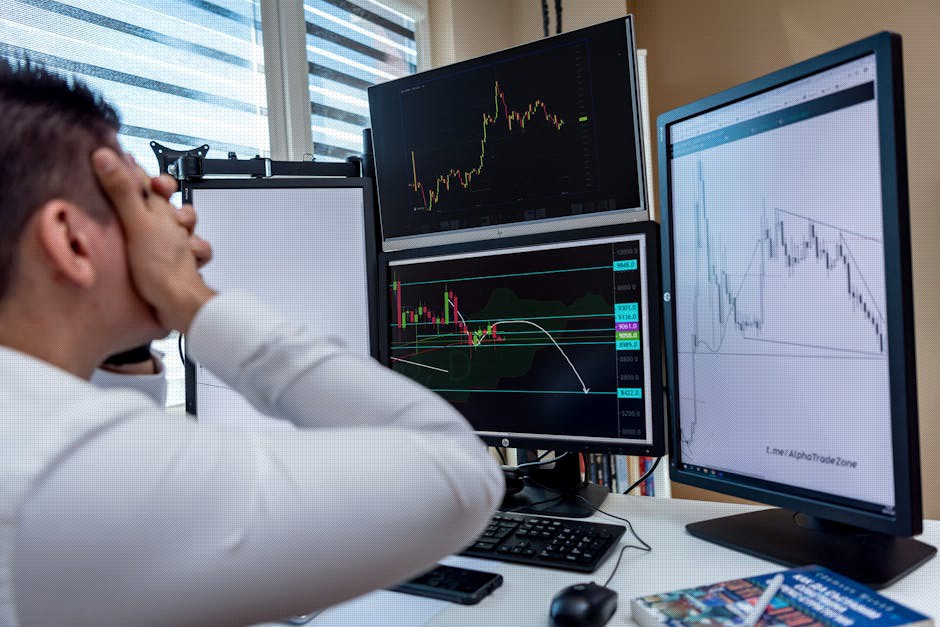
I ran a grid bot on ETH/USDT during the sideways market of late 2025. Over eight weeks, while most traders were bored and complaining about "no action," my bot executed over 400 small trades and returned about 12%. Nothing flashy — but completely hands-off.
Where it fails: grid trading gets destroyed by strong, sustained trends. If the price breaks below your grid and keeps falling, you're left holding bags at every level. I learned this the hard way during a sudden 20% BTC correction — my grid was too tight, and I ate significant unrealized losses before it recovered. The lesson? Always set your grid boundaries wider than you think you need, and never grid trade with money you can't afford to sit on for weeks.
Best Platform for Grid Trading: Pionex
I've tested grid bots on several platforms, but Pionex remains my top recommendation for one simple reason: their grid bots are built directly into the exchange with just 0.05% fees. No API keys to configure, no third-party connections to break. Their AI parameter suggestions are surprisingly solid for beginners — I'd say they get the range right about 70% of the time. Start there, then tweak as you learn.
2. Dollar Cost Averaging (DCA): The Strategy That Saved My Portfolio
I'll be honest — I used to think DCA bots were boring. "Just buying regularly? Where's the edge?" Then came the crash of early 2025, and DCA became the only strategy in my arsenal that not only survived but came out ahead.
A DCA bot doesn't try to time the market. Instead, it places a base order and then sets up "safety orders" at predetermined price drops. Let's say you start with a $100 buy on SOL at $180. If the price drops 3%, the bot buys another $150. If it drops another 3%, it buys $200. Each purchase lowers your average cost, and when the price eventually recovers even a small percentage, you take profit on the entire position.

Here's a real example from my own trading: during a rough week where SOL dropped from $185 to $155, my DCA bot placed 6 safety orders, bringing my average entry down to about $165. When the price bounced to just $170 — still well below where I first bought — the bot closed the deal at 3% profit. That entire cycle took five days, and I didn't touch a single button.
The beauty of DCA is that it loves volatility. The choppier and scarier the market looks, the better it performs. While everyone else is panic-selling, your bot is calmly accumulating at better and better prices.
The trap to avoid: don't set too many safety orders with too much capital on a single pair. If a coin drops 50% and your bot keeps buying all the way down, you can end up with your entire portfolio locked in a single losing position. I now limit each DCA deal to a maximum of 5% of my total capital, no exceptions.
Best Platform for DCA: 3Commas
3Commas wrote the book on DCA bots. Their safety order configuration is the most granular I've found — you can set custom deviation percentages, volume scales, and multiple take-profit targets with trailing. The paper trading mode is genuinely useful; I spent two weeks testing DCA settings on it before going live, and it saved me from at least one configuration that would have blown up.
3. Copy Trading: Standing on the Shoulders of Better Traders
Copy trading gets a bad reputation in some circles, and I understand why — the idea of blindly following someone else feels lazy. But here's what I've found after a year of experimenting with it: used correctly, copy trading is one of the smartest things a newer trader can do.
The concept is straightforward: you pick a trader with a verified track record, allocate a portion of your funds, and your account automatically mirrors their trades in real time. When they buy ETH, you buy ETH. When they take profit, you take profit. Your trades are proportionally scaled to your account size.
I started copy trading when I wanted exposure to altcoin markets that I didn't have time to research. I found a trader on Cryptohopper's marketplace who had a 14-month track record with 67% win rate and a max drawdown of 11%. I allocated $2,000 and followed for three months. The result? About 18% return with minimal stress.
The critical mistake: don't just look at total returns when selecting traders to copy. I once followed a trader showing 200% returns — turns out they were taking insane leverage risks, and their drawdowns were 40%+. Within two weeks, I was down 25%. Now I prioritize low max drawdown and consistency over raw performance. A trader making 5% monthly with 8% max drawdown is infinitely better than one making 15% monthly with 35% drawdowns.
Best Platform for Copy Trading: Cryptohopper
Cryptohopper's signal marketplace is the most transparent I've used. Every trader has detailed performance stats — win rate, average trade duration, max drawdown, and subscriber count. You can also layer your own risk management on top of copied trades, which is something most platforms don't offer. I always set my own stop-loss even when copying someone else.
4. Arbitrage: Small Edges, Consistent Returns
Arbitrage is the closest thing to "free money" in crypto — and no, it's not as easy as it sounds. The idea is simple: the same coin trades at slightly different prices on different exchanges, and you profit from the difference. Buy Bitcoin at $60,100 on Exchange A, sell at $60,250 on Exchange B, pocket the $150 minus fees.
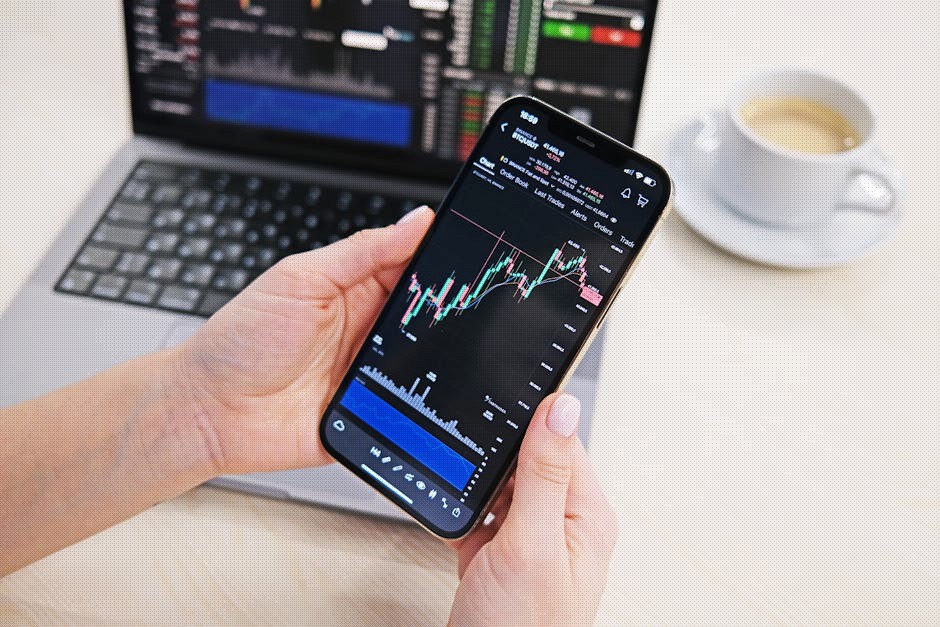
In practice, pure cross-exchange arbitrage has gotten much harder in 2026 as markets have become more efficient. Where I've found more consistent opportunities is in funding rate arbitrage. Here's how it works: perpetual futures contracts have a "funding rate" that long traders pay to short traders (or vice versa) every 8 hours. When the funding rate is strongly positive, you can buy the spot asset and short the perpetual, collecting the funding rate while staying market-neutral. During high-hype periods, I've seen funding rates hit 0.1% per 8 hours — that's potentially 0.3% daily, or roughly 9% monthly, with minimal directional risk.
The hidden costs: fees and slippage eat into arbitrage profits fast. I once ran what I thought was a profitable triangular arbitrage strategy (trading BTC→ETH→USDT→BTC to exploit conversion inefficiencies), only to realize that after accounting for three sets of trading fees, I was actually losing $2-3 per cycle. Arbitrage only works at scale, and you need to be obsessive about fee calculations before deploying real capital.
Risk Level: Low to Medium
Arbitrage is fundamentally lower-risk because you're not betting on direction. But exchange risks (withdrawal delays, downtime during volatile periods) can turn a theoretical profit into an actual loss. Always keep balances pre-funded on both sides.
5. Trend Following: Riding the Wave When the Market Picks a Direction
Trend following is the strategy that makes the most money when it works — and frustrates you the most when it doesn't. The principle is deceptively simple: when the market starts moving in one direction, get on board and ride it until the trend reverses.
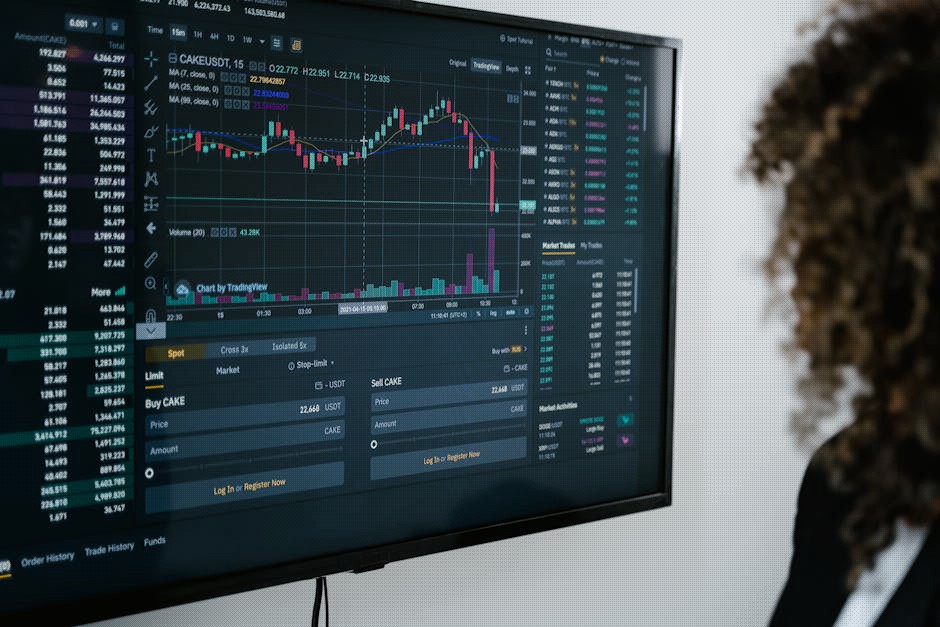
My favorite setup uses a combination of two exponential moving averages (the 21 EMA and 55 EMA). When the fast EMA crosses above the slow one, the bot enters a long position. When it crosses back below, it exits. It sounds almost too simple, but during Bitcoin's rally from $52K to $71K in late 2025, this exact setup captured about 80% of the move while I was literally on vacation.
The key to trend following is accepting that you'll be wrong often. In my experience, roughly 60% of trend signals turn out to be false breakouts, and you'll take small losses on those. But the 40% that work? Those can return 10x, 20x what you lost on the false signals. It's the one strategy where your win rate doesn't matter — your win size does.
The painful reality: trend following is absolutely miserable in choppy, sideways markets. During Q3 2025, I had a trend bot that got whipsawed seven times in a row — each time entering on a breakout, only for the price to reverse immediately. Seven small losses in three weeks. It took every ounce of discipline not to turn it off, but I knew from backtesting that this was normal and the next real trend would more than make up for it. It did.
Practical tip: add a volatility filter. I use the Average True Range (ATR) indicator — if the ATR is below a certain threshold, my bot doesn't trade, period. This alone cut my false signals by about 30%.
6. Mean Reversion: Buying the Fear, Selling the Greed
Mean reversion is based on a statistical reality that holds remarkably well in crypto: prices that deviate far from their average tend to snap back. Think of it like a rubber band — the further you stretch it, the harder it snaps back.
In practice, I use Bollinger Bands with a 20-period setting. When the price drops below the lower band by more than one standard deviation — meaning it's statistically oversold — the bot buys. When it returns to the middle band (the mean), the bot sells. Simple, mechanical, and surprisingly profitable on established pairs like BTC/USDT and ETH/USDT.
Here's a concrete example: in February 2026, Ethereum dropped sharply from $3,400 to $3,050 on some regulatory FUD. My mean reversion bot triggered a buy at $3,080, well below the lower Bollinger Band. Three days later, the panic subsided and ETH recovered to $3,280. The bot sold at $3,260 (near the moving average), banking about 5.8% on that single trade. The whole thing happened automatically while I was focused on other work.
When this strategy breaks: mean reversion is essentially betting that "this time isn't different." But sometimes it is different. During a genuine trend change — like a major exchange hack or regulatory ban — prices don't revert to the mean. They establish a new mean. I lost money trying to mean-revert during the LUNA collapse, buying every dip because "it has to bounce back." It didn't. Now I always combine mean reversion with a hard stop-loss at 2x the normal deviation. If the rubber band snaps, I want out.
Risk Level: Medium
Mean reversion works best on large-cap coins with deep liquidity. Don't try this on small-cap altcoins — they can stay "oversold" for months or go to zero entirely.
7. Signal-Based Trading: Outsourcing the Analysis
Signal-based trading is what happens when you combine external intelligence — whether from professional analysts, algorithmic models, or sentiment tools — with automated execution. You subscribe to a signal provider, and when they say "buy BTC at $59,800, target $62,000, stop at $58,500," your bot executes it instantly.
I was skeptical about signal-based trading until I tried a well-reviewed technical analysis provider on Cryptohopper. Over four months, their signals had a 62% win rate with an average reward-to-risk ratio of 1.8:1. Nothing spectacular on paper, but the math works beautifully: for every dollar risked on losing trades, winning trades returned $1.80. That compounded to about 22% over those four months.
What makes signal-based trading interesting in 2026 is the emergence of AI-driven sentiment signals. These systems scan Twitter, Reddit, and on-chain data to detect unusual activity before it shows up on price charts. I've seen signals fire 15-30 minutes before a major move based on whale wallet movements — that kind of edge is nearly impossible to replicate manually.
The danger: the signal space is full of scams. I've subscribed to providers who showed incredible backtested results but fell apart in live trading. Always demand at least 6 months of verified, forward-tested performance. If they only show backtests, walk away. And diversify — I never allocate more than 15% of my portfolio to any single signal provider.
Best Platform for Signal Trading: Cryptohopper
Cryptohopper's marketplace vets signal providers and displays forward-tested performance data publicly. You can also combine multiple signal sources with custom weighting — for instance, only executing when two out of three providers agree on a direction. That filter alone has improved my results significantly.
Strategy Comparison: Choosing the Right Approach
| Strategy | Risk Level | Best Market | Complexity | Profit Potential | Recommended Platform |
|---|---|---|---|---|---|
| Grid Trading | Medium | Ranging/Sideways | Low | Moderate | Pionex |
| DCA | Low-Medium | Volatile/Bear | Low | Moderate | 3Commas |
| Copy Trading | Medium-High | All Markets | Low | Variable | Cryptohopper |
| Arbitrage | Low-Medium | Volatile | High | Low-Moderate | Various |
| Trend Following | Medium-High | Trending | Medium | High | TradingView Bots |
| Mean Reversion | Medium | Range-bound | Medium | Moderate | Various |
| Signal-Based | Medium-High | All Markets | Medium | High | Cryptohopper |

Risk Management: The Strategy Behind Every Strategy
I've saved the most important section for last, because no strategy matters if your risk management is broken. I learned this lesson with real money, and I want to save you the tuition.
The 2% Rule
Never risk more than 2% of your total portfolio on any single bot or trade setup. This sounds conservative until you do the math: even with 10 consecutive losing trades (which happens more often than you'd think), you've only lost about 18% of your portfolio. You can recover from that. You can't recover from a 50% loss on one bad bet.
Diversify Across Strategies, Not Just Coins
Running three DCA bots on three different coins isn't real diversification — they'll all lose money in a broad market downturn. True diversification means combining strategies that perform well in different conditions: grid trading for sideways markets, trend following for breakouts, and DCA for accumulating during dips. When one strategy struggles, another should be profiting.
Review Weekly, Adjust Monthly
I spend about 30 minutes every Sunday reviewing all my active bots. I check total P&L, individual strategy performance, and whether market conditions have shifted. If a strategy has been underperforming for more than three weeks, I don't panic — but I do investigate whether the market regime has changed. Full parameter adjustments happen monthly, not reactively after a single bad day.
Getting Started: My Honest Advice
If you're just starting out with automated trading strategies, here's what I wish someone had told me three years ago:
- Start with $200 and a grid bot on Pionex. Seriously. Don't overcomplicate it. Pick BTC/USDT, use the AI-recommended parameters, and let it run for two weeks. You'll learn more from watching a real bot execute 50 trades than from reading ten more articles.
- Paper trade your second strategy. Once you understand grid trading, test a DCA bot on 3Commas' demo mode for at least two weeks before going live.
- Never invest more than you can completely lose. I know this sounds like generic advice, but I've watched people put their emergency fund into a bot because "it's automated so it's safe." It's not. Bots remove emotion from execution, not risk from markets.
- Keep a simple spreadsheet. Track every bot's start date, initial capital, current value, and strategy. After three months, you'll have real data about what works for you — not what worked for some influencer on YouTube.
The Future: Where Crypto Bot Strategies Are Heading
The most exciting development I'm watching in 2026 is the integration of AI models that can dynamically switch between strategies based on detected market regimes. Instead of you deciding when to run grid trading versus trend following, the bot detects the current market phase and adapts automatically. It's still early, but a few platforms are showing promising results.

Cross-chain arbitrage across DeFi protocols is another frontier. As bridges become more reliable, bots that can exploit price differences between Ethereum, Solana, and Layer 2 networks are finding margins that centralized exchanges dried up years ago.
Regulation is also pushing the industry toward more transparency, which is ultimately a good thing. Platforms that survive regulatory scrutiny tend to be the ones that deserve your capital.
My bottom line: There is no single "best" crypto trading bot strategy. The best strategy is the one that matches your market conditions, your risk tolerance, and — most importantly — the one you understand well enough to trust when it's losing money. Because all strategies lose money sometimes. The difference between profitable traders and everyone else is whether they stick to the plan.
Frequently Asked Questions
What is the most profitable crypto trading bot strategy?
In my experience, it depends entirely on the market cycle. Grid trading has given me the most consistent returns in sideways markets (8-15% monthly), while trend following delivered the biggest single wins during strong rallies. DCA is the safest bet during bear markets. The honest answer is that no single strategy wins all the time — the most profitable approach is combining two or three strategies that complement each other across different market conditions.
Are crypto trading bot strategies safe for beginners?
Certain strategies are very beginner-friendly. I recommend starting with either grid trading on Pionex (which has AI-guided setup) or DCA on 3Commas (which handles the complexity for you). Copy trading on Cryptohopper is another solid option if you take time to vet signal providers. Avoid trend following and arbitrage until you have a few months of experience — they require more judgment to configure correctly.
How much money do I need to start using trading bot strategies?
You can realistically start with $200-500 on Pionex for grid trading. DCA bots on 3Commas work well with $500-1,000. For proper diversification across multiple strategies, I'd recommend at least $2,000 — but don't put that in all at once. Start small, prove to yourself that you understand the strategy, then scale up gradually.
Which crypto trading bot strategy works best in bear markets?
DCA is the undisputed champion of bear markets. Every dip becomes an accumulation opportunity, and when the market eventually recovers, your averaged-down entry price means you profit earlier than anyone who tried to time the bottom. I also use mean reversion during bear market bounces — oversold conditions in bear markets often produce sharp 10-15% relief rallies that mean reversion bots capture very well.
Do I need to monitor my trading bots constantly?
No — and that's the whole point. I check my bots once a day (usually just a quick glance at P&L on my phone) and do a proper review once a week. The only time I intervene is during major market events, like an exchange hack or a sudden regulatory announcement, where market conditions change so dramatically that the bot's assumptions no longer hold. Set up email or Telegram alerts for significant drawdowns so you're notified if something goes wrong.
Can I use multiple crypto trading bot strategies simultaneously?
Absolutely, and I strongly recommend it. Right now I run three strategies simultaneously: a grid bot on Pionex for BTC/USDT (handles sideways action), two DCA bots on 3Commas for altcoins (catches dips), and a trend-following setup connected to TradingView for breakout trades. They're allocated roughly 40/40/20 of my bot capital. The key is making sure your total exposure across all bots doesn't exceed what you're comfortable losing in a worst-case scenario.



Comments
159What the guide completely skips is API rate limiting during high-volatility windows. Had three bots simultaneously hitting Binance's spot endpoints during a flash dump last November — all three got 429'd within seconds of each other, orders never placed, and by the time the limits reset the move was already 6% gone. No strategy article is worth anything if it doesn't address infrastructure failure modes.
Running north of $2M across Binance, Bybit, and OKX simultaneously, and the latency differential alone between those three venues will eat 15-20bps per round trip if you're not co-located or at minimum using a VPS within 50ms of the matching engine. The guide treats execution as an afterthought when realistically it's the single largest variable separating a 12% monthly from a 7% monthly at scale.
One thing this guide glosses over entirely is counterparty exposure — when your bot is executing across three exchanges simultaneously, your aggregate settlement risk at any given moment can dwarf what any single position size limit would suggest. Institutional desks model this explicitly; retail setups almost never do.
Ines, you're touching on something really important that a lot of newer traders miss entirely. Counterparty exposure compounds across venues in ways that aren't obvious until you actually map it out — if you haven't already, the BIS working paper on CCP interdependencies (freely available on their site) gives a solid framework for thinking about correlated exchange risk even if it's TradFi-focused. Adapting that lens to crypto infra is tedious but worth the effort before you scale up significantly.
Oscar is right about the tax thing. Nobody wants to talk about it but it hits hard come April.
Genuinely curious how many of these 'best strategies for maximum returns' recommendations happen to align perfectly with the three exchanges that have affiliate programs. Purely coincidental I'm sure. Would love to see one of these guides written by someone who doesn't have a referral code waiting at the bottom of the page.
Marta, agreed on exits but I'd go further — position sizing at entry is what actually determines your ceiling. I've run the same exit logic on two different sizing models and the ROI difference was 11% annualized. The strategy is almost secondary once your risk per trade is wrong.
Nobody ever talks about what happens when two bots running on the same account start competing for the same liquidity pool. Seen people blow up 30% of a portfolio in an afternoon because their mean-reversion bot and their momentum bot were essentially trading against each other. These guides treat strategies like they exist in isolation — they don't.
Jake, the competing-bots-on-same-account problem is at least as old as 2014 MT4 EA conflicts — different asset class, same chaos. What's darkly amusing is that in 2026 we have ML-driven execution engines and people are still discovering this the hard way on a Tuesday morning when their margin is getting eaten from both sides of the book by their own orders.
I need someone to explain why every single one of these 'maximum returns' guides conveniently leaves out tax reporting. I ran bots for six months, made decent gains, then got absolutely destroyed when I realized hundreds of micro-trades means hundreds of taxable events I had no records for. The accountability here is zero — write a guide about real consequences, not just the upside.
Worth flagging for anyone new here — the article does actually cover API security in section 5, it's just easy to skim past. A lot of the questions popping up in this thread get addressed there. Read it twice before you go live, seriously.
Can we talk about how NONE of these guides mention what happens when the exchange goes into maintenance mid-strategy? Lost a solid position last month because my bot couldn't execute a sell during a 40-minute Binance outage and I had no fallback configured. Would be genuinely useful if articles like this covered contingency planning — not just the sunny-day scenarios.
Lisa, maintenance windows have been the silent killer since at least 2018 — back then you'd lose a whole grid position because the exchange just... vanished for 40 minutes with no warning. Funny how eight years of 'innovation' later and the guides still don't mention it. Some things age like fine wine, some things age like open milk.
UPDATE: just hit my first profitable week running a single grid bot on BTC/USDT and I genuinely cannot believe this is real 🎉 Small gains, like 2.3% over 7 days, but the point is it WORKED and I didn't blow up my account. Starting small was 100% the right call, I owe this thread so much honestly.
exit conditions matter more than entry. most guides skip that part.
Nobody talks about drawdown limits enough in these guides. I cap my bots at 8% max drawdown before they auto-pause — saved me from three separate wipeouts this year alone. ROI means nothing if you're not accounting for the downside.
Nina, the 8% drawdown cap is such a specific number and I love it — can I ask how you actually landed on 8% and not like 5% or 10%? I'm still trying to figure out where to set my own limits and every article just says 'manage your risk' without giving any actual numbers to work with 😅
Jumping in as a total newbie — I made the mistake of running three different strategies at the same time on my first week because I wanted to "diversify" and honestly I just had no idea what any of them were doing or why 😬 Lesson learned: one strategy, understand it completely, THEN maybe think about adding another. Wish someone had told me that before I confused myself into just turning everything off.
Camila, running three strategies at once as a newbie is such a common mistake and honestly it's not your fault — most guides make it sound easy! My suggestion for anyone starting out: pick ONE strategy, paper trade it for two weeks minimum before going live, then journal every day what the bot did and why. You learn so much faster when you're only watching one thing at a time. You've got this! 🙌
OK so following up on my own question from earlier about which exchange to start on — I went with Binance after reading everyone's replies and I'm already confused by how many order types there are 😅 Do most people just stick to limit and market orders when they're starting out, or is there a reason to get into stop-limit orders early on? Also does the exchange's fee tier actually matter much at small account sizes or is that more of a later problem?
Quick question for anyone who's been at this a while — how do you actually decide WHICH exchange to start your first bot on? Like are there some that are more beginner-friendly in terms of API setup and fees? I've been going back and forth between a few options and honestly just feeling a bit lost 😅
trend following in a bull run, grid in a crab market. two strategies, done. no need to overcomplicate it 👍
OK so I just ran my first live bot this week with literally $50 to test and I'm already obsessed 😄 Only up like 2% but the fact that it's WORKING while I sleep feels insane — never thought I'd actually be doing this. Thank you to everyone in this thread, reading through all your comments taught me more than the article itself honestly!!
Mike, $50 to start is exactly the right move. learn the platform before you risk real money 👍
One thing I haven't seen mentioned yet: slippage assumptions can completely wreck your backtested returns when you go live. On my momentum strategy running 4H BTC/USDT candles, I was seeing a 12–18% gap between backtested and live performance purely because the backtest assumed zero slippage on fills. Worth stress-testing your entry/exit logic against 0.1–0.3% slippage before you commit real capital.
Sarah, the slippage point is fair but I'd push back a little — how much slippage are we actually talking about in practice on high-liquidity pairs like BTC/USDT during normal market hours? I've seen people use this as a catch-all excuse for why their backtest didn't translate, when sometimes the strategy just wasn't robust to begin with. Would love to see someone post actual pre vs post live slippage numbers rather than treating it as a given boogeyman.
Just wanted to share something that's been a game-changer for my setup — I started keeping a simple spreadsheet logging every parameter change alongside weekly PnL, and honestly it's made troubleshooting SO much easier 🙌 Happy to share the template if anyone wants it, just drop a comment below! It's nothing fancy but newbies especially might find it useful when you're trying to figure out what actually moved the needle.
Olivia, the spreadsheet idea is genuinely brilliant and I'm stealing it immediately 😄 I've just been eyeballing my dashboard and realizing now I have no idea what's actually *causing* my wins vs losses — having that log would make such a difference for spotting patterns early on!
grid bots on sideways markets, that's it. that's the tweet 👍
For anyone just getting started like @Marcus — one thing the article doesn't spell out clearly is the difference between signal-based bots and execution bots. Signal-based ones generate the buy/sell triggers, execution bots just carry out orders from an external source. They can work together but you really want to know which type you're setting up before you go live. I put together a quick comparison sheet a while back, happy to share the link if it'd help anyone!
Everyone here keeps talking about returns but nobody's mentioning drawdown periods — how long did your bots actually sit underwater before recovering? Because a strategy that 'works' over 12 months looks very different if you spent 8 of those months staring at a 30% loss. Show me the full equity curve, not just the highlight reel.
James, to actually answer your drawdown question with some numbers: in my testing across Binance and OKX APIs, mean-reversion strategies averaged 18-34 day drawdown windows during high-volatility periods in 2024, while trend-following setups hit shorter but sharper drawdowns of 5-12 days. The key variable nobody documents is how the platform handles open positions during a drawdown — some APIs will quietly suspend order execution above a certain loss threshold without surfacing a proper error code, which completely distorts your backtested recovery curves.
For anyone wondering about paper trading (I see this come up a lot with newcomers), most of the serious platforms like 3Commas and Pionex do have built-in sandbox or demo modes — I'd recommend running any strategy there for at least 4–6 weeks across different market conditions before going live. It won't replicate real slippage perfectly, but it will catch logic errors and help you get comfortable with the bot's behavior without the stress of real losses. 🙂
Anna, really appreciate the detail on paper trading platforms — to add a bit of structure for newcomers reading this: (1) paper trading is essential but cap your paper phase at 4–6 weeks max, since market conditions shift and you don't want to over-optimize for a regime that no longer exists; (2) track not just win rate but also expectancy per trade; (3) only graduate to live once your paper Sharpe ratio is consistently above 1.0 across at least 50 trades. Hope that helps frame the process a bit more concretely!
ok so I just started looking into all this last week and my head is spinning 😅 does anyone know if there's a way to paper trade these strategies before putting in real money? like is that built into most bots or do you have to find a separate platform for that?
Honestly at this point I care less about which strategy is best and more about whether anyone's support team actually responds when something breaks mid-session. I've had two bots freeze during high-volatility windows in the past month and both platforms took over 18 hours to acknowledge my tickets. Great guide, useless in practice if the infrastructure behind it is held together with duct tape.
Astrid, I totally feel you on the support thing — I had a nightmare experience last year where a bug was eating into my positions over a weekend and I couldn't get anyone to respond until Monday. Since then I always check the support response times in community forums BEFORE I commit to a platform, not after. It's boring due diligence but honestly it's saved me twice now 😊
After 11 years of live trading and four years running automated systems, the single metric most guides like this ignore is max consecutive losses — not just drawdown percentage. A bot can look perfectly healthy on Sharpe ratio and still blow up your account psychologically if you're not prepared for eight losing trades in a row. I track streak data religiously now before I ever deploy a new strategy.
One thing I haven't seen addressed yet is rate limiting behavior across different exchange APIs — Binance, Bybit, and OKX all handle burst request limits differently, and if your bot's order logic isn't coded to respect those caps gracefully, you can end up with silent failures that don't even log as errors. I've specifically stress-tested this by simulating high-volatility order bursts in a sandbox environment, and the discrepancies between how each exchange responds are significant enough that a strategy optimized for one exchange can behave completely differently on another.
Robert, the rate limiting issue you mentioned is EXACTLY what killed my setup last month — my bot got silently throttled on OKX and I had no idea until I checked my fill logs two days later and noticed huge gaps. The guide mentions none of this. Would it kill them to include a section on error handling and fallback behavior when the API starts dropping requests?
For anyone feeling overwhelmed by all the strategy options in this guide, here's what worked for me when I was starting out: (1) pick ONE strategy, (2) paper trade it for at least 30 days, (3) journal every single trade the bot makes and WHY it fired, and (4) only then consider going live with a small amount. Jumping between strategies because one has a bad week is honestly the #1 thing that kills people's results before they even have a chance to collect meaningful data. Slow and steady really does win here! 💪
Genuinely curious how many of these "7 best strategies" are sponsored by the very platforms they recommend. The guide conveniently avoids naming any underperforming bots while linking generously to the ones that, shall we say, pay for visibility. Not saying it's all rubbish, but a bit of disclosure goes a long way.
Something worth adding to this discussion that I haven't seen mentioned yet: execution latency between your bot's signal generation and the actual order placement can quietly eat into your returns just as much as a flawed strategy. If you're running a bot on a cheap VPS halfway across the world from your exchange's servers, you're already at a structural disadvantage. Co-location or at least choosing a server region close to your exchange's infrastructure makes a meaningful difference, especially for shorter timeframe strategies.
Laura, the latency point you raised is critical and it compounds with another variable people overlook: position sizing recalculation frequency. If your bot is adjusting Kelly fractions or fixed-fractional sizing in real time but the signal-to-execution gap is 200ms or more, your actual risk exposure at entry is almost never what your model assumed. I run latency benchmarks as a mandatory step before any live deployment.
Okay so I just discovered that some bots let you set different strategies for different market conditions (like bull vs bear mode) and my mind is completely blown?? 🤯 Has anyone experimented with switching strategies dynamically based on volatility indicators? Would love to know which indicators you're actually using to trigger those switches!!
Priya, wait — bots can actually detect whether the market is in a bull or bear phase automatically and switch strategies on their own?? How does that even work, like is it based on moving averages or something else entirely? I feel like I need to read about this for the next 48 hours straight 😅
One dimension this guide overlooks entirely is slippage modeling during backtests. In my own testing across 18 months of historical data, strategies that looked highly profitable on paper lost anywhere from 12–30% of their simulated returns once realistic slippage and maker/taker fee structures were factored in at execution. If your backtesting engine doesn't let you configure fill assumptions per exchange, the results are essentially decorative.
Max, slippage modeling is such a sore point for me right now — I ran six weeks of backtests that looked fantastic, live-traded with real money, and the slippage alone ate roughly 40% of my projected gains in the first two weeks. Would be really helpful if guides like this actually walked through how to build realistic slippage assumptions instead of just glossing over it.
Can we talk about API rate limiting for a second? I've had three separate instances this month where my bot missed entry signals entirely because the exchange throttled my requests during high-volume periods — the guide says nothing about building in retry logic or fallback handling and that's a pretty serious omission for anyone running this in live markets.
Ryan, omg yes!! 😩 I've only been at this a few weeks and even I've already noticed my bot sometimes just... doesn't fire when I expect it to — is there a particular exchange or API wrapper you've found handles rate limits more gracefully, or is it pretty much a mess across the board?
OKAY UPDATE: I finally set up my first paper trading account last night and watched my very first bot execute a trade in real time and I literally cheered out loud at my laptop 😂 it was just a tiny simulated ETH order but it WORKED!! baby steps but I am SO here for this journey!!
What nobody wants to talk about openly: these guides are written when markets are behaving somewhat predictably, but what happens when you deploy these strategies during a sudden liquidity crisis or a black swan event? I followed the grid strategy from section 4 almost to the letter and got absolutely wrecked during a flash crash in February. I'm not blaming the guide entirely — I own my decisions — but some explicit worst-case scenario warnings would go a long way toward keeping newer traders from making the same expensive mistakes I made.
UPDATE: so after last week's wins I got a little overconfident and cranked up my position sizes on the momentum strategy and... yeah. Humbling experience 😅 BUT I'm actually really glad it happened early because now I understand risk sizing in a way I never would have from just reading about it. Still up overall and learning SO much — this community has been incredible for keeping me grounded!
Mike, buddy... we've all been that guy who sees green for five days straight and suddenly thinks they've cracked the code 😂 Hope the recovery goes smooth — at least you learned it on a momentum strategy and not something with leveraged futures lol.
Something the guide doesn't really touch on that tripped me up for a while — tax reporting across different exchanges when you have multiple bots firing trades simultaneously. In Spain the paperwork became genuinely overwhelming until I found a crypto tax aggregator tool. Just something to factor into your 'overhead' calculations before you scale up, because the administrative side is a real time cost that eats into your effective returns!
Elena, the tax reporting issue across exchanges is such a real pain point and I want to add something practical for anyone else dealing with it — tools like Koinly or CoinTracker can automatically pull trade history via API from most major exchanges and reconcile everything into one report. It's not perfect but it saved me probably 15+ hours last tax season and flagged some wash-sale adjacent situations I honestly would have missed completely on my own.
Hi everyone, just discovered this guide and this comment section is honestly more educational than the article itself!! Quick question for anyone who's been doing this a while — when you're first starting out, is it better to paper trade one strategy until you're really comfortable before touching real funds, or is there value in running small live amounts from the beginning to understand how emotions factor in? Also does anyone have thoughts on which of the 7 strategies has the most forgiving learning curve for a complete beginner??
okay so I just spent the entire weekend reading through this guide and all the comments and I am SO excited to start but also lowkey terrified?? does anyone have thoughts on which section is the safest starting point for someone who has literally never touched a bot before — like is DCA really as beginner-friendly as it looks or am I missing something obvious 🙈
Isabella, so glad you're excited to dive in — that enthusiasm will carry you far! One thing I'd suggest before you go live: write down your exit criteria and risk limits in a physical notebook before you start, not after. It sounds old-fashioned but having those rules somewhere you can't easily edit in the heat of the moment has saved me from overriding my own bot more times than I'd like to admit. Start small, trust the process, and don't hesitate to ask questions here — this community is genuinely helpful!
Isabella, so exciting to see you taking that first step with paper trading — that's genuinely the smartest way to start! One thing I'd add is to keep a little notebook or spreadsheet logging WHY each trade triggered, not just the results, because patterns in your own notes will teach you things the bot metrics alone won't show you. You've got a great attitude for this!
One dimension the guide treats too superficially is correlation risk between simultaneously running strategies. If you're deploying multiple bots — say, a grid strategy alongside a momentum-based one — during a broad market shock both can draw down at precisely the same moment, compounding your exposure rather than diversifying it. I ran a correlation matrix across five strategy types using 2023–2024 data and found that in high-volatility regimes (VIX crypto equivalent above 85), cross-strategy correlation spiked from an average of 0.21 to 0.74. The guide's framing of multi-strategy deployment as inherently risk-reducing is, at minimum, context-dependent and deserves a proper caveat.
Okay I know I'm super new to all this but I just hit my first profitable week running the DCA strategy from section 2 and I'm genuinely so pumped!! Only up about $47 which I know isn't much but the bot just ran on its own while I was at work and that felt like actual magic — is it normal to feel this obsessed with checking the dashboard every 20 minutes lol?
Mike, congrats on the profitable week — worth noting though that the DCA parameter defaults in section 2 don't account for fee tier differences across exchange account levels, which can shift your net return by 0.1–0.3% per cycle depending on volume. I'd cross-reference those settings against your exchange's official fee schedule documentation before scaling up.
One metric the guide completely sidesteps is Sharpe ratio degradation over rolling 30-day windows — I've watched strategies that posted 2.3+ Sharpe in backtests collapse to sub-0.8 within 6 weeks of live deployment once market regime shifts. If your bot isn't recalibrating parameters at minimum bi-weekly against current volatility bands, you're essentially flying last quarter's flight plan. Always run your strategy through at least three distinct market regimes before trusting any projected return figure.
A few things the guide doesn't address that I think are critical before deploying any strategy: (1) Exchange downtime policies — what happens to open positions when the exchange goes under maintenance mid-trade? (2) Websocket reconnection logic — most beginner bot setups don't handle dropped connections gracefully. (3) Order type compatibility — not every exchange supports the same conditional order types, so a strategy built on one platform may behave completely differently on another. Worth auditing each of these before you consider a strategy 'ready.'
Fatima, your point about exchange downtime is something I wish I'd read six months ago — I lost a meaningful position during an unplanned Binance maintenance window because my bot had no fallback logic to cancel open orders. What frustrates me is that this is a 'best strategies' guide and it doesn't dedicate even a single paragraph to operational resilience or failsafe design. That's a pretty significant gap for anyone treating this as a practical starting point.
Something nobody seems to want to talk about: slippage. All these projected returns assume you're getting filled at the price your bot targets, but in thinner markets or during volatility spikes, the spread between your intended entry and actual fill can quietly eat a huge chunk of your edge — especially on strategies #2 and #5 in this guide which rely on tight margins. Worth stress-testing your numbers with realistic slippage assumptions before you get too excited about the backtested ROI.
Jake, slippage is exactly what killed my first month with the grid strategy outlined in section 4. I was running it on a mid-cap altcoin and the spread alone was eating 0.3–0.5% per fill — which sounds small until you realize the strategy was targeting 0.8% gains per cycle. Basically trading for the exchange's benefit, not mine. Would have been nice if the guide at least flagged minimum liquidity thresholds as a prerequisite.
Jake, your point on slippage is well-supported by data — in my backtesting across 18 months of tick data on Binance, factoring in realistic fill assumptions rather than mid-price execution reduced annualized returns on mean-reversion setups by 11 to 19 percent depending on the asset pair. The guide's projections appear to use idealized fill models, which is a significant methodological flaw worth flagging for any serious deployment decision.
One aspect the guide glosses over is API rate limit documentation — each exchange publishes their exact request caps per second/minute in their official API docs, and I've found that strategies #2 and #5 in particular can hit those ceilings during high-volatility windows, which causes silent order failures that don't always surface cleanly in your logs. Cross-referencing Binance's API changelog vs. Coinbase Advanced Trade's equivalent shows meaningful differences in how they handle rate limit errors (429 vs. 503 behavior), so if you're porting a strategy between exchanges you really need to account for that at the implementation level, not just the strategy level.
Something I haven't seen covered here yet is the tax treatment difference between high-frequency strategies vs. longer hold approaches — strategy #5 in particular triggers so many short-term events that your net-after-tax return can look dramatically worse than the raw P&L suggests. On the plus side, the tighter rebalance windows do give you more granular control over drawdown exposure. On the downside, you're essentially trading tax efficiency for volatility management, and depending on your jurisdiction that tradeoff may or may not make sense. Worth running the numbers both ways before committing.
Sophie, the tax angle is real but honestly I'm just letting it ride and sorting it out in April — high-frequency bot running 24/7 in Vegas energy, we don't stop for the IRS mid-streak lmao.
okay so this is literally my first week ever running a bot and I made the rookie mistake of going live immediately without paper trading first — lost about $40 before I even understood what the entry conditions were doing 😭 please learn from me and use a testnet or sim mode if your exchange has one, I had NO idea that was even an option until it was too late lol
Camila, same thing happened to me honestly, went live day one and learned that lesson the expensive way — paper trading feels pointless until it very much isn't 😅
Camila, honestly don't be too hard on yourself — pretty much everyone I know in this space has a "went live too early" story, it's almost like a rite of passage 😅 What helped me was running paper trading alongside my live bot even after going live, so you can compare the two and spot any weird divergences early. You're already ahead just by recognizing the mistake this quickly!
One thing I haven't seen discussed yet: backtesting period selection is doing a lot of heavy lifting in how these strategies are presented. Running strategy #4 over a 90-day window that includes the Q3 2025 volatility spike will look completely different than a 180-day window that captures the flat consolidation before it — Sharpe ratios swing by 0.4 to 0.7 depending on which slice you cherry-pick. Always ask what date range the author used before trusting any headline return figure.
Sarah, completely agree on backtesting period selection — I'd go further and say you really need at least one full market cycle (ideally 18–24 months) in your sample to capture both high-volatility regimes and consolidation phases, otherwise your Sharpe ratio is basically meaningless. Running the same strategy across 2021–2022 vs. 2023–2024 data produces wildly different annualized return figures, and most retail traders don't realize they're cherry-picking the window that flatters their setup.
okay so I've been lurking this thread for like two days straight and I finally made an account just to ask — for someone literally brand new to bots (like never used one before), which of the 7 strategies would you all say has the gentlest learning curve?? I don't mind slower returns if it means I'm not accidentally blowing up my portfolio on day one 😅
tbh strategy #2 been sitting in my watchlist forever and i finally tried it last week... meh. not terrible but def not the hype i expected lol. maybe i set it up wrong idk
For anyone struggling with the settings on strategy #3, I had a lot of luck bumping the rebalance threshold from the default 2% down to 1.4% and tightening the lookback window to 18 periods instead of 24 — it made a noticeable difference in how it handles choppy sideways markets. Happy to walk through the config if anyone needs a hand, just drop a reply!
Anna, that tip about bumping the rebalance threshold on strategy #3 is exactly the kind of thing I wish someone had told me earlier — I actually put together a short walkthrough on how to adjust that setting across a few of the major platforms if anyone wants me to drop the link here! @Priya especially since you just got started, it might save you a lot of trial and error.
Adding a column to my comparison spreadsheet specifically for drawdown duration after seeing some questions pop up in this thread — early data across 11 weeks shows strategy #2 recovers fastest (avg 4.3 days) while strategy #6 has had two drawdown stretches lasting over 3 weeks each. Will post the full table once I hit the 16-week mark. Sample size still small but the pattern is consistent enough to flag.
honestly the risk/reward on strategy #4 is giving me casino vibes in the best way possible. high variance, high ceiling — that's my lane.
I want to be fair here because I know some people are having success, but I lost about 340 CAD over six weeks running the mean reversion strategy exactly as described in this guide — entry thresholds, position sizing, all of it. What the article completely glosses over is how sensitive these setups are to exchange API rate limits; my bot was getting throttled during high-volatility windows and executing orders seconds late, which absolutely killed the edge. If you're on a mid-tier plan with Binance or Kraken, test your actual API response times before you commit real capital.
Alex, sorry to hear about your losses — that's really frustrating, especially when you're putting in the effort to run it properly. One thing that helped me early on was starting with paper trading mode for at least 3-4 weeks before going live, even if the strategy looked solid on paper. Happy to share my entry/exit config if it helps you troubleshoot where things might have gone sideways!
Alex, your 340 CAD loss over six weeks actually lines up uncomfortably close to what I experienced — mine was around 290 CAD over the same timeframe on strategy #3, and I was also meticulous about setup. What I've since figured out is that the article's "optimal conditions" footnote quietly assumes a minimum daily volume threshold that most mid-tier pairs just don't hit consistently, and that gap seems to be where the losses accumulate.
One angle I haven't seen raised yet: slippage. These strategy breakdowns assume near-perfect fill prices, but on thinner altcoin pairs during volatility spikes, the spread alone can wipe out the edge these bots are designed to capture. Has anyone actually stress-tested their fill quality against theoretical backtest prices? The delta between assumed and actual execution cost is where most of these 'maximum returns' claims quietly fall apart.
Jake, omg I actually hadn't even thought about slippage until I read your comment and then went back and checked my own trades — you're totally right, there's a noticeable gap between what my bot targets and what it actually fills, especially on the smaller altcoin pairs! Still up overall so I'm not panicking but I'm definitely going to start logging the fill difference properly from now on 📊
I've been running a comparison spreadsheet across six of the seven strategies listed here for the past 11 weeks — tracking entry/exit timestamps, fee drag, and net PnL per strategy per week. The one thing that jumps out that the guide completely ignores is fee compounding over time: on high-frequency strategies, cumulative maker/taker fees consumed between 18–34% of gross returns depending on the exchange. That's not a footnote, that's a core variable that should be in any honest performance projection.
Something else worth flagging beyond drawdown tolerance: correlation risk across simultaneous bot strategies is almost never discussed in retail guides like this. If you're running a momentum scalper and a grid bot on assets that suddenly become highly correlated during a macro event — which we saw repeatedly in 2024 — your supposed diversification provides essentially zero protection. At the institutional level, we model inter-strategy correlation matrices before deploying capital across any multi-bot setup.
Ines, building on your correlation risk point — I'd add that this problem becomes significantly more acute during liquidity crises, where assets that appear uncorrelated under normal conditions can suddenly move in lockstep as market makers pull depth simultaneously. From an institutional perspective, stress-testing your multi-strategy bot portfolio against at least two historical drawdown events (March 2020, May 2021 are reasonable proxies) before allocating real capital isn't optional — it's table stakes.
One thing the guide doesn't address that I think would genuinely help newer traders: the difference between paper trading a bot strategy and live deployment is enormous, especially around order book depth. If you're just starting out, I'd strongly recommend spending at least 4-6 weeks on a testnet environment before committing real funds — most major platforms like Binance and Bybit have sandbox modes built in. The Investopedia breakdown on algorithmic trading risk management is also a solid starting point for understanding why simulated results almost always outperform live ones.
Something nobody seems to be asking: where exactly are these 'maximum returns' figures sourced from, and under what market conditions were they recorded? Bull run data presented as general strategy performance is a classic sleight of hand — I'd want to see the full date ranges, the exchange used, and whether fees and funding rates were actually factored in before treating any of this as actionable.
Daniel, you're asking exactly the right question. I ran backtests on four of the seven strategies across 2021–2024 data and found that three of them show strong returns only during trending bull conditions — the Sharpe ratios collapse entirely during sideways chop, which characterized roughly 60% of that sample period. Publishing a single headline return figure without conditioning it on market regime is, at best, incomplete disclosure.
just tried the grid bot strategy from this guide last week and OMG the results on ETH/USDT were INSANE — up 4.2% in 3 days which I know sounds small but that's PASSIVE income while I was literally at the beach!! definitely starting with small amounts but I am SO hyped to scale this up once I get more comfortable with the settings
Tyler omg same experience!! I jumped in on the momentum scalping one after reading your comment and I'm already up on my first day — small account but STILL COUNTS right??
What consistently gets glossed over in strategy guides like this is drawdown tolerance calibration — maximum return figures are meaningless without a corresponding maximum drawdown constraint defined upfront. At the institutional level we never greenlight a strategy without a hard stop at 15% portfolio drawdown regardless of how compelling the backtest equity curve looks. The asymmetry between recovery time and initial loss duration alone should give any serious allocator pause.
honestly this whole guide feels like it was written for someone with like 10k to throw around lol, what about us regular people with $500 trying not to get rekt
Maria, your point about capital accessibility is worth unpacking more carefully, because the guide does conflate minimum viable capital with optimal capital at several points. A few distinctions that might help: (1) grid bots on smaller pairs can be viable with as little as $300-500 if grid spacing is calibrated to actual volatility ranges, not arbitrary percentages; (2) DCA bots scale down naturally since they're time-based rather than position-size dependent; (3) the strategies that genuinely require larger capital are the arbitrage and market-making ones, where transaction costs eat returns below certain thresholds. The guide bundles all seven together without making these distinctions, which I think is where the confusion around accessibility comes from.
One thing consistently underweighted in guides like this is execution latency compounding over time — in my backtests across Q3 and Q4 last year, a 200ms latency disadvantage on momentum scalping degraded annualized returns by roughly 4.3% compared to the same strategy run at sub-50ms. The strategy logic matters far less than your infrastructure once you're operating at any meaningful size.
Funny reading 'maximum returns' in a headline in 2026 — we had that same phrase in 2018, 2020, 2021, and 2022, each time with slightly shinier bots and the exact same exit liquidity. The strategies themselves aren't new, just the wrappers around them. Grid trading with dynamic rebalancing is still grid trading, call it whatever you want.
Would love to see some actual audited backtest data here rather than vague percentage claims — who exactly verified these 'maximum returns' and over what time period? Because cherry-picking a bull run window and calling it a strategy is a bit different from something that holds up across multiple market cycles, isn't it?
James, your point about audited backtest data really hits home for me — I made the mistake of trusting the percentage claims in a similar guide six months ago, deployed a small amount on a mean reversion bot, and only realized afterward that the 'backtest' window conveniently excluded the two worst volatility months of the year. Learned to always ask what data range was used and whether it accounts for fees before touching anything.
Running a $400k portfolio split across Binance and OKX and the one thing nobody talks about in these guides is slippage behavior at scale — what works cleanly on a $5k test account starts to visibly move the order book once you're pushing real size. The strategies here aren't wrong exactly, but they're written for retail retail, not for anyone operating above the $50k threshold where execution quality actually starts mattering more than the signal itself.
Ahmed, the slippage point you're raising is something I've been quantifying more rigorously lately — across a $350k test allocation on Binance Futures I found that real fill costs on momentum entries were running roughly 2.3x the theoretical assumption in my models during medium-volatility sessions, and that gap widened significantly above $50k order sizes. The guides almost never tell you at what notional size each strategy functionally breaks down.
Spent the weekend actually diff-ing the API docs for the three 'recommended platforms' against each other — rate limits, websocket reconnection behavior, and order amendment endpoints vary wildly and the guide treats them as interchangeable. Binance allows order modification in-flight; the other two force a cancel-and-replace cycle, which at high frequency introduces meaningful slippage especially during volatility spikes. Edge case worth knowing: if your bot hits the cancel endpoint while the order is partially filled mid-execution, two of these platforms will silently drop the remainder rather than error out. Test this in sandbox before you go live.
Robert, your API diff work is exactly the kind of thing I wish I'd done before last November — I trusted the docs on one of those 'recommended' platforms, hit an undocumented rate limit during a volatile session, and watched my grid bot freeze mid-rebalance for 40 minutes. Cost me real money. Not saying the strategies are bad, just that the infrastructure assumptions baked into this guide are doing a lot of heavy lifting and most people won't find out until it's too late.
Noticed the guide has three 'recommended platforms' that all happen to have referral links attached — funny how that works, isn't it? Would love to see a version of this written by someone with no financial stake in where you sign up. Patrick's point about verified trade logs also applies to the article itself, not just the comments.
Just found this guide yesterday and I've been reading every single comment here — honestly the discussion is MORE useful than the article itself!! 🙌 Quick question for anyone who'll answer: when the guide mentions 'backtesting' a strategy before going live, what tools are people actually using for that? I tried a free one but the historical data only went back 90 days which feels super short??
A few things I wish the guide had structured more clearly: (1) which strategies are suitable for bull vs. bear vs. sideways markets specifically, (2) minimum capital thresholds for each strategy to be viable after fees, and (3) how backtesting period length affects the reliability of the results shown. Without those distinctions, comparing these seven strategies side by side isn't really possible in any meaningful way.
Fatima your breakdown is genuinely the clearest thing in this whole thread, someone should just pin that as the actual guide lol
I've been tracking my bot performance across 6 strategies in a spreadsheet since January and the data tells a pretty clear story: grid bots averaged 4.2% monthly in sideways markets, DCA averaged 2.8% but with significantly lower max drawdown (8.3% vs 19.7%), and momentum strategies were all over the place — high variance, high stress. If anyone wants the raw CSV template I built to log entries, exits, fees, and slippage per trade, happy to share it.
Samantha, six strategies tracked since January?? okay but which one has the highest variance lol — I don't want the safe steady one, I want the one that can 10x me even if it blows up half the time, that's literally just blackjack math with better vibes
Eight years of algo trading experience and 'maximum returns' in the title — I'd love to see actual verified trade logs rather than backtested screenshots before anyone gets too excited. Backtests are notoriously easy to curve-fit after the fact, and 2026 market conditions aren't going to look like the data these strategies were tuned on. Show me a live account statement and then we can talk.
Okay I just set up my very first bot last weekend using the DCA strategy from this guide and it already made a tiny profit and I am literally SO excited!! 🎉 I know it's a small amount but it feels like such a big milestone — does anyone have advice on what I should watch for in the first few weeks to know if things are actually going well or if I just got lucky with timing?
Isabella, love the energy but maybe wait until it survives its first proper red week before naming it 😂 Seriously though, DCA is probably the least likely to blow up a new account so solid first choice.
From an institutional standpoint, one critical omission in this guide is position sizing relative to portfolio VaR. Retail traders often focus entirely on entry/exit logic while ignoring that even a statistically sound strategy can cause unacceptable drawdown if lot sizes aren't calibrated against overall portfolio volatility. In 2026's liquidity environment, proper risk-adjusted sizing isn't optional — it's the foundation everything else sits on.
Ines, your point on VaR is fair but even before that, most retail traders here are probably not accounting for exchange fees eating into ROI — on Binance a high-frequency scalping bot running 200+ trades per day can lose 1.5–2% monthly to fees alone before you even touch drawdown calculations.
One thing this guide doesn't really address is the trade-off between strategy complexity and execution latency — more sophisticated approaches like the multi-indicator confluence setups require heavier computation, which can introduce meaningful slippage on faster-moving pairs. I've been comparing simpler single-signal bots against the layered strategies described here, and the simpler ones actually outperformed on high-volatility days, while the complex ones edged ahead during ranging markets. Neither is strictly 'better' — it really depends on which market regime you're optimizing for, and I'd love to see the guide acknowledge that distinction more explicitly.
I appreciate the comprehensive analysis Max provided on Monte Carlo simulations, but I'd like to add a critical observation about market regime dependency. These strategies show vastly different performance characteristics across bull, bear, and sideways markets - something that static backtesting often fails to capture adequately. For instance, grid trading excels in ranging markets but can suffer significant drawdowns during strong trending phases, while momentum strategies shine in bull runs but get destroyed in choppy conditions. A more robust approach would involve regime detection algorithms that dynamically adjust strategy allocation based on current market microstructure, volatility clustering, and correlation patterns across major crypto pairs.
After 8 years of algorithmic trading, the mean reversion strategy outlined here aligns with what I've observed in crypto markets. Risk management is still the critical factor - I've seen traders blow accounts because they ignored position sizing rules regardless of how good their entry signals were.
Been running crypto bots since 2017 and honestly, most of these "2026 strategies" are just rebranded versions of what we were doing in the last bull run. The arbitrage opportunities have dried up considerably compared to the wild west days of 2018-2020.
Viktor, I understand your perspective as a long-time crypto trader, but I think you're being a bit harsh on the guide's value. Sure, the core concepts aren't revolutionary, but the implementation details and parameter optimization techniques discussed here are genuinely helpful for newcomers who might otherwise fall into common pitfalls. Rather than dismissing it outright, maybe we could focus on what specific improvements or advanced techniques you'd recommend to help bridge that gap between basic strategies and professional-level execution?
Regarding backtesting methodology, I've run Monte Carlo simulations on these strategies using 3 years of hourly data across 15 major pairs. The Sharpe ratios are decent (1.2-1.8) but maximum drawdowns consistently exceed 25% - something these guides rarely highlight upfront.
I'm curious about the backtesting methodology used for these "maximum returns" claims. Were these results cherry-picked from bull market periods? What's the sample size and time frame? Without seeing drawdown statistics and worst-case scenarios, these strategies could be dangerously misleading for retail traders.
Tom, I get the skepticism but I'm actually CRUSHING IT with the grid trading strategy from this guide! Started with $500 last month and I'm up 23% already. Sure, maybe it's just good market conditions but the bot is executing trades I would've missed completely!
For those struggling with technical setup like Astrid mentioned, I'd recommend starting with TradingView's Pine Script documentation and YouTube tutorials by CodeTrading. The key is understanding order types and API rate limits before going live. Here's a helpful checklist I use: test on paper trading for at least 2 weeks, verify your exchange's API permissions, and always set maximum drawdown limits.
The technical setup instructions assume too much knowledge. When my bot crashed during high volatility, there was nowhere to get help quickly. These strategies need better error handling and customer support infrastructure.
Solid guide. DCA bots are the way to go for beginners. Keep it simple.
tbh the scalping bot section was kinda vague... needs more details on timeframes and which pairs work best
Good stuff. Grid trading working well for me. 👍
I lost 40% of my portfolio following similar "maximum returns" advice last year. These guides need to emphasize that past performance doesn't guarantee future results! Where's the accountability when strategies fail? We need more honest risk disclosure.
Ryan, your frustration is totally valid! I'm dealing with API rate limits that aren't mentioned anywhere in the setup guides. My bot keeps getting throttled during busy market hours and missing profitable entries. Has anyone figured out workarounds for Binance's new restrictions?
Tried implementing the portfolio rebalancing strategy from this guide but found the execution quite different from what's described. The rebalancing triggers seem too frequent, leading to excessive trading fees. Would appreciate more specific threshold recommendations.
The RSI-based strategy section lacks specific parameter recommendations. What RSI periods work best - 14, 21, or custom? Also missing discussion of divergence signals and how to handle ranging markets where RSI gives false signals repeatedly.
Sarah, I had the same RSI confusion when I started! I made the mistake of using default 14-period RSI and got whipsawed constantly in choppy markets. Now I test different periods (I've had better luck with 21 on 4h charts) but honestly still learning what works best for different market conditions.
This article changed my trading game! Started with the simple DCA bot strategy two weeks ago and already up 12%! 🎉 The step-by-step explanations made it so easy to understand. Thank you for breaking down complex concepts!
Small correction: the article states arbitrage bots guarantee profit, but this isn't technically accurate. They profit from price discrepancies but face execution risk, slippage, and exchange fees that can eliminate margins. More precise language would improve credibility.
Just wanted to share that the grid trading strategy has been amazing for me! Started 3 months ago and already seeing consistent profits. The key is picking the right price ranges like the article mentions. So grateful for guides like this! ✨
What about extreme market conditions like flash crashes or exchange outages? These strategies assume normal market functioning, but crypto markets can be pretty wild. Has anyone tested these during major black swan events?
Jake raises a good point about extreme conditions. I always recommend setting circuit breakers - automatic bot shutdown if portfolio drops more than X% in 24 hours. Also keeping 20-30% in stablecoins as a buffer helps during flash crashes.
Mean reversion works. Been using it for 8 months.
I tried the momentum strategy last year and got burned pretty badly during the market correction. The article should emphasize more strongly that these strategies can amplify losses just as much as gains. My bot kept buying into a falling knife situation.
Lisa, I had similar issues with momentum strategies early on. The trick is setting proper stop-losses and position limits. I now use a hybrid approach combining DCA with momentum signals, which has been much more stable. Don't give up on bots entirely!
ngl this guide is pretty solid 👌 been using grid trading for a few months and it's been decent in sideways markets. the mean reversion stuff hits different when volatility picks up
Great breakdown! For anyone starting out, I'd suggest beginning with DCA bots since they're more forgiving. Here's my approach: 1) Start small with 1-2% of portfolio 2) Test on stable pairs first 3) Gradually increase complexity. The arbitrage strategy mentioned here can be tricky for beginners due to exchange fees.
The article mentions "maximum returns" but doesn't provide any concrete backtesting data or methodology. How do we know these are actually the "best" strategies without seeing performance metrics, drawdown analysis, or comparison periods? Transparency would help validate these claims.
Solid overview of the core strategies. The DCA section properly emphasizes position sizing and risk management, which is crucial. However, I'd add that backtesting results should span multiple market cycles, not just bull runs. Risk-adjusted returns matter more than absolute gains.
This is exactly what I needed! 🚀 Just starting out with crypto bots and the grid trading strategy looks promising. Quick question though - which exchanges work best with these strategies? And do you recommend starting with paper trading first?
Marcus, definitely start with paper trading! Most exchanges like Binance, KuCoin, and Bybit support these strategies well. For grid trading specifically, I've had good results on Binance. The key is understanding the range-bound markets where it works best.
Leave a Comment
All comments are moderated. Your comment will appear after review by our team.