

Pionex has carved out a unique niche in the cryptocurrency trading landscape by combining a full-featured exchange with built-in trading bots. Since its launch in 2019, this Singapore-based platform has attracted over 10 million users worldwide by offering free access to 16 different automated trading strategies. But is Pionex the right choice for your crypto trading needs in 2026?
What Is Pionex?
Pionex is a cryptocurrency exchange that integrates automated trading bots directly into its platform. Unlike traditional exchanges where you need third-party tools or manual trading, Pionex provides built-in bots that execute various trading strategies automatically. The platform is operated by BitUniverse, a company founded by former employees of tech giants like Google and Tencent.
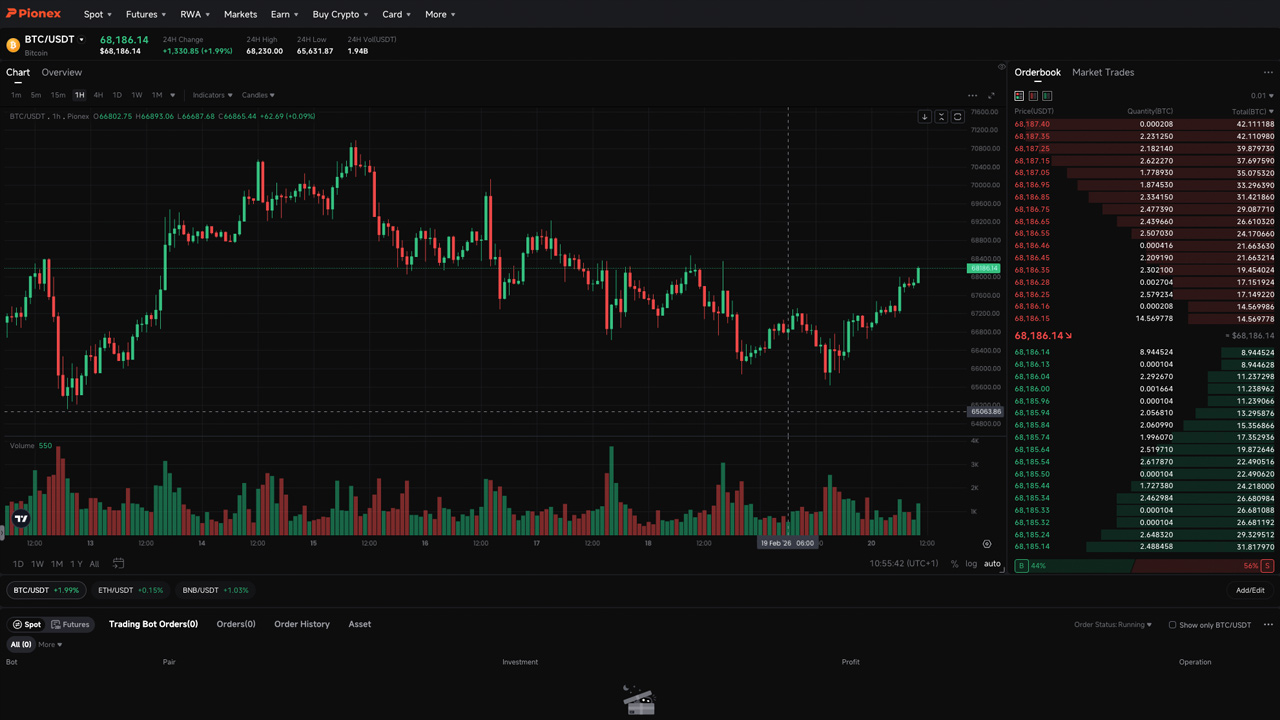
The exchange supports over 300 cryptocurrencies and operates under regulatory frameworks in multiple jurisdictions. What sets Pionex apart is its "all-in-one" approach, eliminating the need for separate bot subscriptions or complex API integrations.
Key Features and Trading Bots
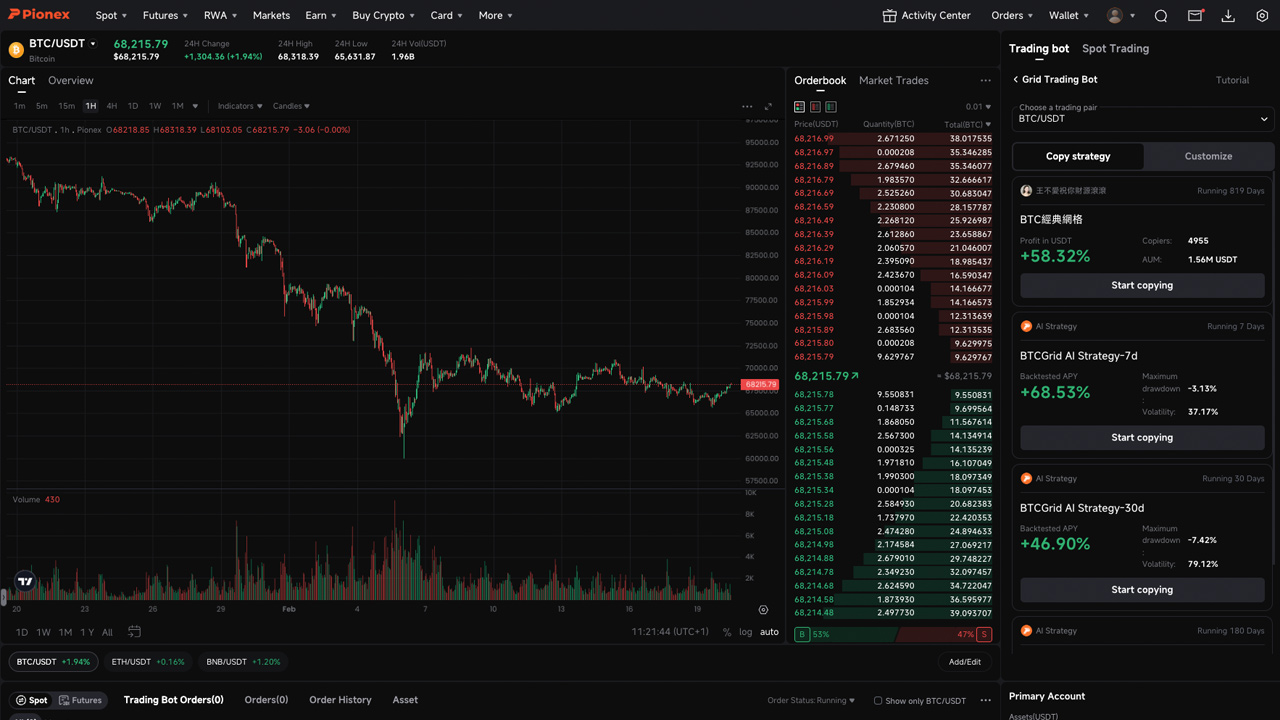
Grid Trading Bot
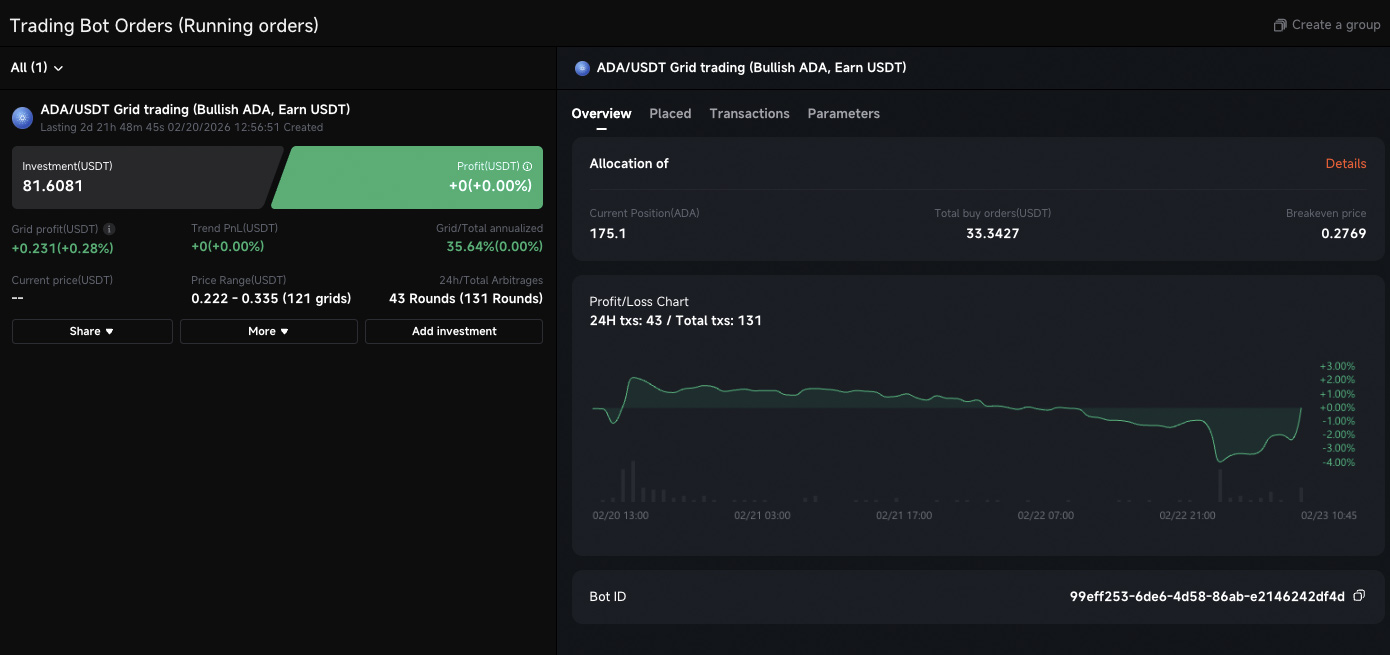
The Grid Trading Bot is Pionex's flagship feature, designed to profit from market volatility. It places multiple buy and sell orders at predetermined intervals within a price range. When the market fluctuates within this range, the bot automatically buys low and sells high.
- Best suited for sideways or ranging markets
- Customizable grid parameters (number of grids, price range)
- AI-recommended settings for beginners
- Historical backtesting available
DCA (Dollar-Cost Averaging) Bot
The DCA bot automatically purchases a fixed dollar amount of cryptocurrency at regular intervals, regardless of price. This strategy helps reduce the impact of volatility over time.
- Ideal for long-term investment strategies
- Configurable investment frequency and amount
- Take-profit settings available
- Perfect for bear markets or accumulation phases
Rebalancing Bot
This bot maintains a predetermined portfolio allocation by automatically buying and selling assets to keep the desired percentage distribution. It's particularly useful for maintaining exposure to multiple cryptocurrencies.
Martingale Bot
The Martingale bot doubles down on losing positions, buying more as the price drops. While potentially profitable in recovering markets, it carries higher risks and requires careful capital management.
Leveraged Grid Bot
Similar to the regular grid bot but with leverage, allowing traders to amplify their positions. Available leverage ranges from 2x to 5x depending on the trading pair.
Fees and Pricing Structure
Pionex operates on a competitive fee structure that's transparent and straightforward:
Trading Fees
- Spot trading: 0.05% for both makers and takers
- Futures trading: 0.05% for makers, 0.05% for takers
- No additional fees for using trading bots
- VIP levels available with reduced fees based on trading volume
Other Fees
- Withdrawal fees vary by cryptocurrency
- No deposit fees for most cryptocurrencies
- Fiat deposit fees depend on payment method and region
The platform's fee structure is significantly lower than many competitors, especially considering that bot usage is completely free. Traditional bot services often charge monthly subscriptions ranging from $20 to $100 or more.
Security and Regulation
Security Measures
Pionex implements several security features to protect user funds:
- Two-factor authentication (2FA) mandatory for all accounts
- Cold storage for the majority of user funds
- SSL encryption for all data transmission
- IP whitelisting for API access
- Email and SMS notifications for account activities
Regulatory Compliance
Pionex operates under various regulatory frameworks:
- Licensed as a digital payment token service provider in Singapore
- Compliant with anti-money laundering (AML) regulations
- KYC (Know Your Customer) verification required
- Regular security audits and compliance checks
User Experience and Interface
Platform Design
Pionex offers both web and mobile applications with intuitive interfaces designed for both beginners and experienced traders. The platform successfully balances simplicity with functionality, making automated trading accessible to newcomers while providing advanced features for experienced users.
Mobile App
The Pionex mobile app receives high ratings on both iOS and Android platforms. Key features include:
- Full bot management capabilities
- Real-time portfolio tracking
- Push notifications for bot activities
- Complete trading functionality
Educational Resources
Pionex provides extensive educational content including:
- Detailed bot tutorials and guides
- Market analysis and strategy discussions
- Webinars and video content
- Active community forums

Advantages
- Free trading bots: Access to 16 different automated strategies at no additional cost
- Low fees: Competitive 0.05% trading fees across all pairs
- User-friendly: Intuitive interface suitable for beginners
- Diverse bot selection: Various strategies for different market conditions
- Good security: Industry-standard security measures and regulatory compliance
- Active development: Regular updates and new features
Disadvantages
- Limited geographical availability: Not available in all countries, including the United States
- Smaller exchange: Lower liquidity compared to major exchanges like Binance
- Bot complexity: Some strategies require good understanding of trading concepts
- Customer support: Response times can be slow during peak periods
- Limited fiat options: Fewer fiat currency pairs compared to major exchanges
Getting Started with Pionex
Account Setup Process
- Registration: Create an account using email and complete basic verification
- KYC Verification: Upload identity documents for full account access
- Security Setup: Enable two-factor authentication and other security features
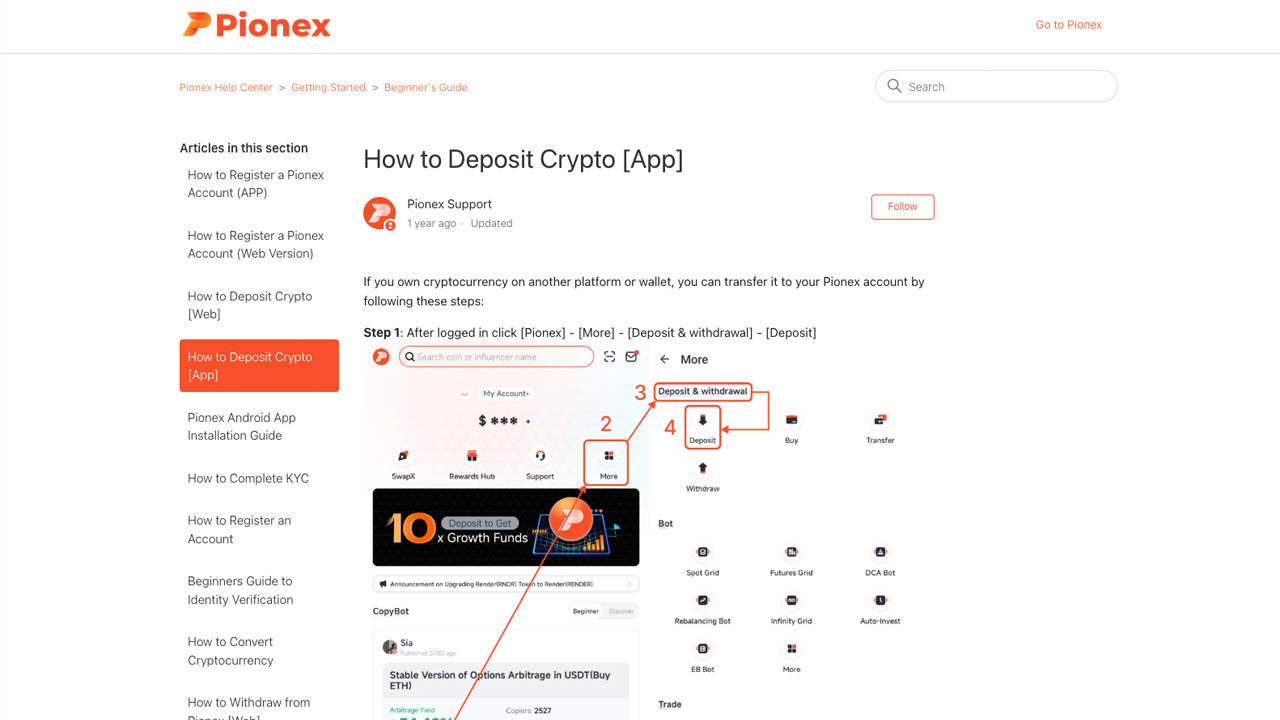
- Fund Your Account: Deposit cryptocurrency or fiat currency
- Start Trading: Begin with manual trading or activate your first bot
Best Practices for Beginners
- Start with small amounts to understand bot mechanics
- Use the AI-recommended settings initially
- Focus on Grid Trading Bot for sideways markets
- Monitor bot performance regularly
- Diversify across multiple bots and strategies
Performance and Reliability
Based on user reports and platform statistics, Pionex demonstrates solid performance in terms of uptime and execution speed. The exchange has maintained over 99.9% uptime in 2026, with minimal service disruptions. Bot execution is generally reliable, though performance varies significantly based on market conditions and strategy selection.
Bot Performance Metrics
Pionex provides detailed analytics for each bot, including:
- Total profit/loss calculations
- Annualized return percentages
- Number of completed orders
- Risk metrics and drawdown analysis
Comparison with Competitors
vs. Traditional Exchanges
Compared to exchanges like Binance or Coinbase, Pionex offers:
- Built-in automation (major advantage)
- Lower overall costs for bot trading
- Smaller token selection
- Less liquidity for large orders
vs. Dedicated Bot Services
Against services like 3Commas or Cryptohopper:
- No monthly subscription fees
- Integrated exchange experience
- Fewer customization options
- Limited third-party exchange integration
Tips for Maximizing Success
Strategy Selection
- Bull markets: Focus on DCA bots and long-term grid strategies
- Bear markets: Use short grid bots or rebalancing strategies
- Sideways markets: Grid trading bots typically perform best
- Volatile periods: Smaller grid ranges with more frequent trades
Risk Management
- Never invest more than you can afford to lose
- Diversify across multiple strategies and assets
- Set appropriate stop-loss levels
- Regularly review and adjust bot parameters
- Keep some funds in reserve for manual trading opportunities
Future Outlook and Development
Pionex continues to evolve with regular updates and new features. The platform has announced plans for:
- Additional bot strategies and AI improvements
- Enhanced mobile app functionality
- Expanded geographical availability
- Integration with more DeFi protocols
- Advanced portfolio management tools
Conclusion
Pionex represents a compelling option for cryptocurrency traders interested in automated strategies without the typical high costs associated with bot services. The platform's unique approach of combining exchange and bot functionality creates genuine value, particularly for users who want to experiment with algorithmic trading without significant upfront investment.
However, success with Pionex requires understanding that automated trading isn't guaranteed profit. Market conditions, strategy selection, and proper risk management all play crucial roles in outcomes. The platform works best for traders who take time to understand different strategies and actively monitor their bot performance.
For 2026, Pionex continues to be a solid choice for automated crypto trading, especially for users in supported regions who value cost-effective access to multiple trading strategies. While it may not replace major exchanges for all trading needs, it serves as an excellent specialized platform for automated trading strategies.
Frequently Asked Questions About Pionex
Is Pionex a Scam?
No. Pionex is a legitimate cryptocurrency exchange with built-in trading bots, operating since 2019. The platform is backed by BitUniverse and has obtained Money Services Business (MSB) licenses from FinCEN in the United States. It serves millions of users globally and aggregates liquidity from Binance and Huobi, ensuring deep order books and reliable execution.
Is Pionex Safe?
Pionex is an exchange — not just a bot platform — so your funds are held on Pionex itself. The platform uses industry-standard security including two-factor authentication (2FA), cold wallet storage for the majority of funds, and encrypted data transmission. Because the bots are built into the exchange, there are no API key risks. However, as with any centralized exchange, you are trusting Pionex with custody of your assets.
How Do You Withdraw Money From Pionex?
Since Pionex is a full exchange, you withdraw directly from Pionex. Go to your wallet, select the cryptocurrency you want to withdraw, enter your external wallet address, and confirm the transaction. Withdrawals are processed on-chain and typically arrive within minutes to an hour depending on network congestion. Fiat withdrawal options may vary by region.
Are Pionex Trading Bots Really Free?
Yes. All 16+ built-in trading bots on Pionex are completely free to use. There are no subscription fees, no monthly charges, and no hidden costs. Pionex makes money through a small trading fee (0.05% maker/taker), which is among the lowest in the industry. This makes Pionex one of the most cost-effective options for automated trading.
What Is Pionex Grid Trading Bot?
The Grid Trading Bot is Pionex most popular tool. It automatically places buy and sell orders at preset intervals within a price range you define. When the price fluctuates within your grid, the bot profits from each completed buy-low/sell-high cycle. It works best in sideways or ranging markets where prices bounce between support and resistance levels.
Is Pionex Good for Beginners?
Yes. Pionex is arguably the most beginner-friendly trading bot platform available. Since the bots are built directly into the exchange, there is no need to set up API keys, connect external services, or manage complex configurations. The AI-assisted setup can recommend grid parameters based on market analysis, making it easy for newcomers to get started.




Comments
165Something the guide treats as a minor footnote but deserves more attention: Pionex's API rate limits are significantly more restrictive than competitors like Binance or OKX, which directly impacts the viability of running multiple bots simultaneously through third-party integrations. If you're planning a hybrid setup — some native Pionex bots alongside external signals — you'll hit throttling thresholds faster than the documentation suggests. Worth stress-testing that ceiling before committing serious capital.
Nobody warned me that the mobile app and desktop interface show different bot performance metrics for the same active bot — spent two hours thinking my grid bot had a bug before figuring out it was just a display inconsistency. That kind of thing is maddening when you're trying to make quick decisions.
Honestly the withdrawal limits are what get me — they bump up against KYC verification in ways the guide glosses over completely. Took me three days to get my funds out the first time. Not a dealbreaker but definitely worth knowing upfront!
Aisha, the KYC friction you're describing compounds another issue I haven't seen raised here: Pionex operates under a Seychelles entity structure for most non-US users, which means withdrawal disputes fall into a regulatory grey zone with limited recourse compared to platforms domiciled in MiFID II or MAS jurisdictions. For institutional-adjacent sizing, that jurisdictional ambiguity alone warrants serious due diligence before deployment.
One risk factor the guide doesn't adequately address is counterparty exposure — since Pionex acts as both exchange and bot provider, any platform-level insolvency event would simultaneously affect your trading positions and your access to the bots managing them. From an institutional standpoint, this concentration risk is non-trivial and warrants keeping position sizes appropriately limited relative to your overall portfolio allocation.
Ines, you raise a really valid concern about counterparty exposure — one thing that helped me feel a bit more comfortable with it was keeping only a portion of my total crypto holdings on Pionex and treating it strictly as an active trading allocation rather than a storage solution. Not a fix for the structural issue you're pointing out, but it does limit downside if something goes wrong on their end.
Has anyone else noticed that roughly half the 'independent' reviews of Pionex floating around right now share suspiciously similar phrasing in the fee comparison sections? I'm not saying this guide is doing that, but it does make me wish more authors disclosed upfront whether referral arrangements are in play — would make it a lot easier to calibrate how much to trust the enthusiasm.
One correction worth noting: the guide states that Pionex offers 18 built-in bots, but as of Q1 2026 the actual count is 16 — two listed on their marketing page (the 'Smart Trade' and 'Leveraged Grid' variants) are region-restricted and unavailable in most of Europe and parts of Asia. That's a meaningful distinction if you're signing up based on that feature count.
Nadia, thanks for flagging the bot count discrepancy — that kind of detail matters when you're trying to compare platforms side by side. For anyone wanting to verify the current number themselves, Pionex's own help center at pionex.com/en/support keeps a fairly up-to-date list of available bots, and it's worth checking there directly rather than relying on third-party guides that may lag behind product updates.
One thing I haven't seen mentioned yet: Pionex's bot configuration doesn't carry over if you close and reopen a bot mid-cycle, which matters for tax reporting purposes. Key points to track: (1) each bot closure is treated as a realized event on most platforms, (2) the built-in trade history export only goes back 90 days by default, and (3) the CSV format requires reformatting before it's compatible with most crypto tax tools like Koinly or CoinTracker. Worth factoring this into your recordkeeping workflow before you scale up the number of active bots.
Fatima, that's a really important point about bot configurations not persisting — I ran into the same issue and it caught me off guard. To add to what you flagged: the parameter loss also seems to affect the trailing-up setting specifically, which is arguably the most time-consuming to recalibrate since it depends on your original entry conditions. Worth keeping a local backup of your settings before closing any active bot.
Tom, good question on the liquidity claim — I dug into this a bit and from what I can tell Pionex aggregates liquidity from Binance and Huobi rather than running a fully independent order book, which means you're exposed to whatever latency or spread conditions exist on those underlying exchanges at the time your bot fires an order. That's a meaningful distinction the guide should be upfront about rather than marketing it as proprietary built-in liquidity.
I've been logging my grid bot performance in a spreadsheet for the past three months across four pairs, and one pattern that stands out: grid spacing set too tight (under 0.5%) on high-volatility pairs causes the bot to trigger almost continuously during pump-dump cycles, racking up fees that outpace grid profit by roughly 2:1 in the worst weeks. Wider grids feel counterintuitive but the data consistently favors them on anything with daily volatility above 4%.
Something the guide glosses over is the difference between Pionex's fee structure for grid bots versus the infinity grid — on paper both charge 0.05% per trade, but the infinity grid tends to generate significantly more trades in volatile markets, which can quietly erode your returns if you're not tracking total fees paid versus profit realized. Worth building a simple fee tracker before you commit capital to either strategy.
Sophie, in my experience — about nine years trading across multiple platforms — the infinity grid fee difference you're flagging is the kind of thing that looks minor until you're running meaningful volume, and then it compounds fast. I ran the numbers on a $10k position over 60 days and the fee delta between grid and infinity grid came out to roughly 18% higher total cost on the infinity side, depending on volatility. It's not a dealbreaker, but it should absolutely factor into which bot type you default to.
Ryan raises a fair point about the app sync issue, and Tom's liquidity question is also worth taking seriously — these are exactly the kinds of gaps that detailed community discussion helps fill in when a guide can't cover everything. For what it's worth, Pionex has historically been pretty transparent on their blog about liquidity sourcing, so checking their official posts alongside threads like this one usually gets you to a solid answer.
Nobody warned me that the mobile app and the desktop interface don't always sync bot status in real time. I had a bot showing as 'running' on my phone for almost two hours after I'd paused it from the browser. That kind of inconsistency is a serious problem when you're trying to react quickly to market moves.
Robert, those API rate limit findings are actually super useful — saved me from a headache before I even started building anything custom on top of it. Appreciate you sharing the real numbers instead of just the docs version.
Wait, so does anyone know if you can run multiple different bot types on the same trading pair at the same time? Like could I have a grid bot AND an infinity grid bot both running on BTC/USDT simultaneously, or does Pionex block that? I feel like the guide kind of assumes you're only doing one thing at a time but I'd love to stack strategies if that's possible??
Liam, to answer your question — yes, you can technically run multiple bot types on the same pair, but from my experience it gets messy fast. I'd recommend keeping a Grid bot and a DCA bot on separate pairs to avoid them essentially fighting each other over order placement. If you do try it, start with very small allocations so you can see how they interact before committing real funds.
One thing worth flagging that the guide doesn't address is how Pionex handles tax reporting — specifically, the platform doesn't generate any official tax documents, so you'll need to export your trade history manually and run it through something like Koinly or CoinTracker. If you're in the EU this matters a lot given reporting requirements. The Pionex help center has a CSV export walkthrough under Account > Trade History, and most tax tools will accept that format directly.
The guide keeps emphasizing Pionex's 'built-in liquidity' as a major selling point, but can someone actually verify what that means in practice? Are they aggregating from external exchanges or is this just marketing language for their own internal order book? Because those are very different things and the distinction matters a lot when spreads widen during volatile markets.
One thing the guide doesn't cover at all is Pionex's API rate limits and how they behave under stress. I tested edge cases with their REST API and found that aggressive polling (anything above ~10 requests/second per endpoint) triggers throttling with a 429 that doesn't always include a Retry-After header — inconsistent with their own documentation. If you're building any custom scripts or connecting third-party tools on top of Pionex, factor that in before you assume the integration will be stable.
Something the guide glosses over entirely: what happens to your open grid orders during a platform outage or maintenance window? If Pionex goes down mid-volatile-session and your bot can't cancel or adjust orders, you could be holding bags at prices that made zero sense when the grid was originally set. I've never seen a solid answer from them on SLA guarantees or what recourse users actually have in that scenario — anyone dug into the terms on this?
Jake, I ran into the same uncertainty with maintenance windows and here's what I found helps: go to Pionex's official status page and enable email alerts — they do post notices before scheduled maintenance, usually a few hours ahead. Also, from my experience, grid orders that are mid-execution during a brief outage tend to resume from their last confirmed state once the platform comes back up, so you don't lose your price levels. Not a perfect system, but knowing the status page exists honestly saved me a lot of panic-refreshing.
Building on what David raised about fee structures — it's worth noting that the fee implications change further when you're running multiple bots simultaneously on the same pair. A few things to keep in mind: (1) overlapping grid ranges across bots can generate redundant trades that each incur the 0.05% fee, (2) the cumulative cost compounds faster than most calculators surface at a glance, and (3) Pionex's dashboard doesn't currently aggregate total fees paid across all active bots in one view, so you need to export transaction history manually to audit this properly.
One thing that genuinely frustrated me when I started: the guide makes onboarding sound seamless, but the KYC verification process took nearly four days for me and support responses were template replies that didn't address my actual issue. Not a dealbreaker, but if you're hoping to catch a market move quickly after signing up, factor in that buffer time. Would have appreciated even a single sentence in the guide flagging this.
Ben, omg yes the KYC thing caught me completely off guard too!! 😅 I submitted my docs and then just... silence for like four days with no status update in the app. Does anyone know if there's a way to actually track where your verification is in the queue, or is it just vibes until you get an email?
One aspect worth adding to this discussion: tax reporting with Pionex can get complicated quickly. Key points to be aware of: (1) each grid trade cycle is a separate taxable event in most jurisdictions, meaning a single bot running for weeks can generate hundreds of individual transactions; (2) Pionex's export functionality gives you raw trade history but no pre-calculated gain/loss summaries, so you'll need a third-party tool like Koinly or CoinTracker; (3) the profit display inside the bot dashboard does not account for your cost basis method, which may differ from what your tax authority requires. Worth factoring this overhead into your overall assessment of whether the platform suits your situation.
One thing nobody's mentioned yet: the mobile app's push notifications for bot status are genuinely unreliable. I had a grid bot stop running after a connectivity hiccup and didn't find out for almost 18 hours because the 'bot paused' alert never came through. By the time I noticed, the price had moved well outside my range. For a platform marketing itself as hands-off automation, that's a pretty serious gap.
Ryan, this actually happened to me too when I first started! I missed a bot hitting its upper limit because the notification never came through and I didn't check the app for two days — by then it had just been sitting idle the whole time. Now I set a separate price alert on TradingView as a backup. Lesson learned the hard way!
Small but important correction to something implied throughout this guide: Pionex is not a pure exchange — it aggregates liquidity from Binance and Huobi, which means your order execution and slippage characteristics are inherited from those underlying venues, not generated natively by Pionex itself. This distinction matters when comparing fill quality or troubleshooting unexpected price mismatches in your bot's trade history.
Something the guide doesn't clarify well is the distinction between Pionex's fee structure for spot grid bots versus their infinity grid — both advertise 0.05% per trade, but the infinity grid's compounding rebalancing behavior means your effective number of trades per day is substantially higher in volatile markets, which compounds fee drag in ways that aren't immediately obvious from the headline rate alone. Worth modeling this out in a spreadsheet before committing capital to longer-running infinity grid setups.
For anyone still figuring out grid spacing, a little thing that helped me a lot was running Pionex's backtesting tool on at least 30 days of historical data before going live — it won't predict the future but it gives you a gut-check on whether your chosen range would have survived recent volatility. I usually aim for a range that's about 1.5x the average weekly high-low spread of the pair, and that's kept me from setting grids that are too tight and trigger-happy. Hope that's useful for anyone just starting out! 😊
Anna, backtesting on Pionex is fine for a rough sanity check, but I'd treat the results with some skepticism — the tool uses idealized fill assumptions that don't account for slippage during high-volatility periods. Same problem Cryptohopper had with their backtester back in 2019, same problem here in 2026. Some things are apparently eternal.
From a risk management standpoint, one thing this guide glosses over is counterparty risk — Pionex is a licensed exchange but it routes liquidity through Binance and Huobi, meaning you're exposed to the operational health of those platforms too, not just Pionex itself. I keep no more than 5% of any portfolio on a single CEX for exactly this reason, and that ceiling applies here regardless of how attractive the bot returns look on paper.
Ines raises a valid point about counterparty risk, and I'd layer on a quantitative consideration: when sizing your grid bot allocation, treating Pionex as a single counterparty exposure means it should be capped relative to your total portfolio using the same logic you'd apply to any single-exchange concentration risk — I personally use a hard ceiling of 15% of liquid crypto holdings on any one platform regardless of licensing status, because regulatory approval and solvency are orthogonal risks.
I'll be the awkward one and point out that virtually every 'complete guide' to Pionex on the internet — including this one — exists because of referral commissions. Not saying the information is wrong, just that you might want to cross-reference with someone who isn't getting a cut of your signup. Genuinely useful platform from what I can tell, but a bit of healthy skepticism about the source never hurt anyone.
Sean, you're not wrong, but honestly this has been the case since grid bots first showed up on Bitsgap and 3Commas years ago — every 'definitive guide' is really just a current-conditions snapshot dressed up as timeless wisdom. At least Pionex has the decency to keep most of it free while you figure that out.
One thing I haven't seen mentioned yet is the difference between Pionex's native grid bot and their Leveraged Grid bot in terms of API rate limits and order placement logic — according to the official documentation, the Leveraged Grid sends significantly more requests per interval due to margin rebalancing, which can occasionally trigger throttling during high-volatility periods. I ran a side-by-side comparison across both bot types on BTC/USDT over 30 days and the Leveraged Grid had roughly 12% more missed fills during peak hours. Worth factoring in if you're deciding between the two, especially since most guides treat them as interchangeable.
Yuki, good that you flagged the Leveraged Grid — but let's be direct: the numbers rarely justify the added risk for most retail users. In sideways markets my unlevered grid on ETH/USDT returned roughly 0.8% weekly over Q1; the 2x leveraged equivalent on a comparable range returned 1.1% but drew down 34% during a single volatility spike. That delta is not worth it unless you are actively monitoring positions.
Something nobody really talks about enough is the emotional side of running these bots — I genuinely had to stop checking my Pionex dashboard every 20 minutes because the anxiety was killing me even when the bot was doing exactly what it was supposed to do! 😄 Once I stepped back and let it run for a full week without obsessing over every fill, my overall returns actually improved because I stopped panic-pausing it at the wrong moments. If you're new like Priya, that mindset shift is honestly just as important as any grid setting you configure. You've got this! 💪
Elena, oh my gosh YES — I literally had to delete the Pionex app from my home screen and bury it in a folder just so I'd stop obsessively tapping in to check every 20 minutes!! 😂 My partner thought I was losing the plot. First week was rough but once I stopped staring at it the whole thing actually started feeling kind of… peaceful? Like a little money robot just quietly doing its thing. Still early days but I'm cautiously optimistic!! 🤞
Just set up my very first grid bot on Pionex last week and honestly I'm equal parts thrilled and terrified!! 😅 I started super small with just $50 on BTC/USDT to get a feel for things before putting in real money — has anyone else done a 'practice run' like this before scaling up? Would love any tips on how long you ran a small test before committing bigger funds!
Priya, congrats on your first grid bot — that mix of excitement and nerves is so normal and honestly it means you're paying attention! One thing that really helped me when I was starting out was setting the upper price limit a bit higher than you think you need, maybe 15-20% above current price, so the bot doesn't stop out early if there's a sudden spike. Also don't forget to check in on your profit range every couple of weeks as the market shifts. You've got this! 😊
One edge case I never see discussed in these Pionex guides: what happens to your open grid positions during a scheduled exchange maintenance window? If the market moves hard while your bot is frozen mid-cycle, you could come back to a completely blown grid range with no fills on either side. Has anyone actually stress-tested this scenario, or are we all just assuming uptime is reliable enough to ignore it?
Jake, really glad you raised the maintenance window issue because I got burned by exactly this — had a grid running on BTC/USDT during a Pionex scheduled downtime that coincided with a sharp 8% wick, and by the time the bot came back online my lower boundary had already been blown through with no sell orders triggered to cushion it. Support was polite but basically said it was in the terms. Would be nice if any of these guides actually listed the historical downtime frequency so people could factor that risk in before committing capital.
Been systematic about bot trading since 2019 and one metric I never see people track is slippage per grid fill, not just the stated 0.05% fee. After logging 14 months of Pionex fills, my realized cost per trade averaged closer to 0.071% once you factor in spread on thinner pairs. Stick to top-10 market-cap pairs by volume and that number drops to about 0.053%, essentially at-fee.
Kevin, you raise a really underappreciated point about slippage per grid fill, and I'd extend it further — slippage impact is also highly asymmetric depending on whether you're trading during high-liquidity windows versus off-hours, particularly for non-BTC pairs. On Pionex specifically, the internal matching engine can mask some of this since they route through aggregated liquidity, but it doesn't eliminate it entirely. Have you observed any consistent pattern in which pairs or time windows produce the worst slippage in your tracking?
Running a seven-figure crypto portfolio across Pionex, 3Commas, and Bitsgap and the one thing Pionex consistently wins on is execution latency during volatile sessions — I've clocked it side by side with 3Commas bots on the same pair during a BTC pump and Pionex filled grids roughly 200-400ms faster on average. That matters more than most people realize when you're running tight grids. The tradeoff is the asset selection Sophie mentioned, which genuinely limits what you can do at scale.
Real numbers from 6 months running Pionex grid bots: my best performer was ETH/USDT with 150 grids, returned 18.3% grid profit — but that was during a ranging market. The moment ETH trended hard upward I underperformed a simple buy-and-hold by 11%. That's the metric nobody puts in the headline: grid bots are range-capture tools, not trend tools. Compare your bot ROI against passive hold before declaring victory.
Nina, those ETH/USDT numbers look solid on paper, but I'd push back a little — did you account for the opportunity cost of the USDT sitting idle in unfilled lower grid orders during that period? I ran a similar 150-grid setup for four months and once I backed out the capital that was just parked waiting for fills that never came, my effective annualized return dropped from what looked like ~20% to closer to 11%. Still positive, but the headline figure is genuinely misleading if you're not being rigorous about capital utilization.
Quick tip nobody talks about: set your investment amount per bot BEFORE you start, not after you see it running. I got excited watching my first bot and kept adding funds mid-cycle — totally messed up my average entry. Discipline first, gains second! 🙂
Something worth adding to this thread that I haven't seen covered yet: Pionex's coin selection for grid bots is notably limited compared to running a custom bot on a full exchange like Binance. On the plus side, that constraint actually forces you toward higher-liquidity pairs where grid strategies tend to perform more reliably anyway. The downside is that if you're eyeing a mid-cap altcoin with good ranging behaviour, you may simply not find it available — which is a real limitation for more experienced traders looking to diversify strategies beyond BTC and ETH pairs.
Sophie your point about coin selection actually hit different for me lol — I tried setting up a grid on a lower cap alt last month and Pionex just... didn't have it 😭 ended up having to use a whole separate exchange just for that one pair which kinda defeats the whole "all-in-one" vibe they're selling ngl
Nobody warned me that watching your first grid bot make like 47 tiny trades overnight would be more addictive than doomscrolling. My sleep schedule is cooked but my portfolio is... fine I guess? Worth it.
One edge case I haven't seen discussed yet: Pionex's API rate limits behave differently depending on whether you're using the trading bot endpoints versus the manual order endpoints. In my testing, the bot execution API allows up to 10 requests per second per IP, but the account info endpoint drops to 2 per second — which matters if you're building any kind of external monitoring wrapper around your bots. Their documentation lists these limits but doesn't clearly distinguish between authenticated and public endpoints, which caught me off guard during integration. Worth reading the API changelog carefully before assuming parity across endpoint types.
Robert, worth clarifying something precise about those API rate limits you mentioned — the distinction isn't just web vs. app, it's also whether your requests are hitting the public market data endpoints versus the private order/account endpoints. Private endpoints have stricter per-second caps, and exceeding them mid-rebalance can cause a partial fill that the bot doesn't automatically reconcile. I'd recommend anyone relying on the API to review Pionex's official rate limit documentation directly rather than going by community estimates, which are often outdated.
I've been running automated bots since the Haasbot days when you needed a dedicated server and a mild caffeine addiction just to keep things running — the fact that Pionex bundles exchange and bot infrastructure together is genuinely novel, not just marketing. That said, every generation of bots promises 'set it and forget it' and every generation of traders learns the hard way that ranging markets and trending markets need completely different grid configurations. History rhymes, as they say.
Okay I just signed up last week and I'm completely obsessed — but can someone explain how Pionex actually makes money if there's no trading fee on the bots? Like is the spread built in somewhere? And does that affect which pairs are better or worse to run grids on? Sorry if this is obvious, still learning!
Pionex makes money on the 0.05% trading fee per transaction — your bots literally pay for the platform with every grid trade.
Okay so my biggest beginner mistake that I wish someone had warned me about: I set my grid range way too narrow on my first bot because I thought tighter = more trades = more profit?? WRONG. The price broke out of my range within like 6 hours and the bot just... sat there doing nothing while I watched the chart go up without me. Lesson learned — leave more room than you think you need!
Camila, narrow grid ranges are a real trap — I learned to size my grids at minimum 2x the average 30-day ATR of the pair before I deploy anything. Running tighter than that on a volatile asset basically guarantees you exhaust one side of the range within 48-72 hours and the bot just sits there doing nothing while the price keeps moving. ATR-based sizing has cut my idle bot time by roughly 60% compared to eyeballing the chart.
Okay so I just discovered you can actually set price alerts INSIDE the bot dashboard so you get notified if your grid range is about to be breached — why does literally no guide ever mention this?? 🤯 Has anyone figured out the best threshold to set those alerts at, like a percentage outside the grid range or something?
Marcus, the price alert feature you mentioned is genuinely useful, but there's an important nuance worth noting: the alerts trigger based on the last traded price rather than the mid-market price, which can introduce a small lag during low-liquidity periods when the spread widens. In practice this is rarely more than a few basis points on major pairs like BTC/USDT, but on smaller altcoin pairs I've seen the discrepancy reach 0.3–0.5% — enough to matter if you're using the alert as a precise rebalancing trigger rather than just a general heads-up.
Something the guide glosses over completely: what happens to your open grid orders when Pionex does scheduled maintenance? Lost about 40 minutes of a volatile window last month with zero warning, and by the time the bots came back online the price had already moved outside my range. Support just pointed me to their status page like that was supposed to help.
Alex, your point about maintenance windows is not hypothetical for me — I had three active grid bots during a scheduled maintenance last month and came back to find two had closed at a loss because the price moved outside my range while orders were frozen and couldn't adjust. Zero communication from Pionex beforehand, had to dig through their Telegram to even confirm it was planned downtime. Would be nice if the guide mentioned that this is a real operational risk, not just a theoretical one.
Mei Lin raises a solid point about Sharpe ratio but honestly I'd go further — has anyone actually stress-tested these bots during a genuine black swan event, not just normal volatility? The guides love to show backtests from relatively stable periods, which tells you almost nothing about how the strategy holds up when liquidity dries up and spreads blow out simultaneously.
Patrick, stress-testing is exactly the right instinct — I've been backtesting across the March 2020 and May 2021 drawdown periods specifically, and what I found is that the bots don't just underperform during sharp directional moves, they can actually lock up significant capital in unfilled lower grid orders for weeks at a time. The opportunity cost of that trapped liquidity rarely gets factored into the ROI figures people post.
Fair warning to anyone thinking about running multiple bots simultaneously — I tried running three grid bots at once across different pairs and the fee accumulation absolutely ate into my margins in a way I did not anticipate at all. Single bot, narrow focus, track it properly first. Learned that the expensive way so you don't have to.
Alex your warning about multiple bots at once is SO timely because I was literally about to do exactly that this weekend — I just got confident after my first small win and thought okay let's go bigger!! Saving myself from that chaos, thank you!! Do you think starting with just two bots is still too risky or is it more about keeping them on different pairs?
Nobody warned me that setting up a grid bot at 2am is basically gambling with your sleep schedule. Woke up at 6am to check it like a nervous parent dropping their kid off at school for the first time. Worth it? Jury's still out lol.
One metric I rarely see discussed in these threads: Sharpe ratio of the bot's returns vs. simply holding the underlying asset. On my ETH grid over Q1, the bot posted a 1.47 Sharpe against a 0.83 for buy-and-hold over the same window — meaningful edge, but only because I sized the price range to two standard deviations of 30-day realized volatility. Without that discipline the range is essentially arbitrary.
Mei Lin, your point about Sharpe ratio is one of the more technically grounded takes in this whole thread — and honestly it connects to something people overlook: the bot's fee drag compounds over time, so even a decent risk-adjusted return on paper can look a lot thinner once you factor in the 0.05% per trade across hundreds of fills. Worth running those numbers before you judge the strategy fair.
OKAY I literally just screenshotted my infinity grid this morning and I'm up 4.3% in six days which I know isn't huge but for someone who was just letting crypto sit in a wallet doing nothing this feels like actual magic??? So glad I finally took the plunge 🥹📈
Emma I saw your comment about the 4.3% and honestly that gave me SO much courage to finally press the start button on mine!! 🎉 I just launched my first grid bot on ETH/USDT with a tiny amount to test — can anyone tell me if there's a way to get notifications when trades actually execute or do I just have to keep refreshing the app like a maniac?
Everyone keeps talking about how great the returns are but I'd love to see some actual verified numbers rather than anecdotes. What are the realistic annualized returns after fees, slippage, and the inevitable sideways months? Because the marketing page conveniently only shows cherry-picked bull run scenarios.
Patrick, genuinely appreciate you pushing back on the anecdote pile — though I'd add a layer to your skepticism: a decent chunk of these 'guides' exist because Pionex runs a referral program, so the incentive to present the rosy six-day screenshots and not the six-month drawdowns is pretty structural. Not accusing anyone in this thread specifically, just worth keeping in mind when the comment section reads like a testimonial page.
Can we talk about the mobile app for a second? The desktop experience is fine but every time I try to adjust my grid parameters on mobile the interface lags, inputs don't register properly, and twice now I've accidentally submitted changes I didn't intend to. Lost maybe $40 in slippage because of it. This needs to be fixed before they market this as a full trading-on-the-go solution.
Okay so I just set up my first grid bot yesterday and I'm already obsessed 😅 one thing I can't figure out though — does adjusting the grid range mid-run actually reset your position or does it pick up where it left off? Anyone dealt with this?
Marcus, to answer your question about grid spacing and price range adjustments — it's worth distinguishing between two scenarios here. If your asset moves outside the configured range entirely, the bot stops executing trades and essentially holds a single position, which most people don't realize until they check back after a volatile weekend. The more nuanced issue is that even within range, grid density relative to volatility significantly affects fee drag, so a tighter grid in a low-volatility period can actually erode more profit through transaction costs than a wider one would.
DCA bot + bear market = actually useful. That's all.
One dimension I didn't cover in my earlier backtest data: withdrawal timing. Across my tracked periods I noticed a consistent 8-12 minute settlement lag during peak hours that doesn't show up in Pionex's own reporting, which can quietly distort your realized vs. theoretical returns if you're rotating capital between bots frequently. Worth building a buffer into any strategy that depends on rapid redeployment.
Max, your withdrawal timing observation is really valuable and I don't think enough people pay attention to this — I actually put together a short checklist for timing withdrawals around peak network congestion windows that I've been sharing in the Discord. Happy to drop it here if anyone wants it, just say the word! @Marcus Chen this might help you too as you're getting started with your grid bot setup.
For anyone still figuring out which bot to start with, I'd genuinely suggest the Smart Trade terminal before jumping into grids — it helped me get comfortable with how Pionex executes orders without risking a full position. Once you feel confident there, the DCA bot with a 5-10% price drop trigger and 5 safety orders is a really forgiving setup for beginners. Happy to share my exact parameters if anyone wants them! 😊
Anna, that's such good advice — I did exactly what you suggested and started with Smart Trade before touching any of the automated bots, and it genuinely saved me from a few rookie mistakes. For anyone on the fence, just think of it as a learning sandbox before you put real strategy on the line. You'll thank yourself later!
Something I haven't seen quantified here yet: the compounding effect of Pionex's 0.05% maker/taker fee structure becomes non-trivial at high grid frequency. Running 50+ grid lines on a volatile pair, you can easily accumulate 8–12% in fees monthly, which completely offsets grid profit on tight ranges. Always model your break-even grid width against expected fee drag before deploying capital.
Running about $85k across Pionex and two other platforms right now, and the one thing that consistently stands out is how Pionex handles rebalancing within the grid during high-volatility windows — Binance's own grid tool slips noticeably more during rapid wicks in my experience. The fee structure Mei Lin mentioned is real, but at volume it's actually more competitive than it looks on paper.
honestly just threw $500 at the infinity grid on a mid-cap alt and I'm up 18% in 11 days, not overthinking it lol
I've been tracking my grid bot performance in a spreadsheet since January and the slippage on low-liquidity pairs is genuinely concerning — averaging 0.3–0.8% above expected fill prices during off-peak hours. That might sound small but across 200+ trades it compounds into a meaningful drag on returns that the guide completely glosses over. Would be curious if anyone else is logging their actual fills vs. projected fills.
Samantha, your spreadsheet approach is exactly right — I ran a 6-month backtest across 14 pairs comparing Pionex's native grid vs. a manually rebalanced equivalent, and the grid consistently underperformed during trending phases by roughly 9–15% depending on trend duration. The bot shines in sideways consolidation windows, so filtering entry timing by ATR thresholds made a meaningful difference in my results.
OK so I know I'm super new to all this but I just hit my first profitable week using the DCA bot and I'm literally shaking 😭🎉 I put in only $50 to test and made like $3.20 which sounds tiny but the PRINCIPLE of it working is blowing my mind!! Does anyone know if the DCA bot compounds automatically or do I need to manually reinvest the gains? Sorry if that's a dumb question lol
One thing I haven't seen discussed yet: Pionex's API rate limits are inconsistently documented across their v1 and v2 endpoints. I ran edge case tests last week and hit a 429 error at 8 requests/second on the order placement endpoint, but their official docs still cite 10 req/s as the ceiling. Worth flagging if you're building any custom automation on top of their bots — the discrepancy can cause silent order failures that are genuinely hard to debug.
Robert, glad you raised the API documentation issue because I hit exactly this wall last week — spent the better part of an afternoon cross-referencing v1 and v2 docs only to find the rate limit headers behave differently in practice than what's written. For a platform positioning itself as developer-friendly, the lack of a proper changelog or versioning notice is genuinely frustrating and frankly a bit unprofessional.
Been using the grid bot for 3 weeks. Works fine tbh. Just don't over-leverage and you're good.
Quick correction to something I keep seeing repeated in this thread and in the guide itself — Pionex does NOT offer 24/7 live customer support as stated. Their support operates on a ticket-based system with typical response windows of 12–48 hours depending on queue load. I've documented three separate instances this quarter where the 'live chat' widget simply queued into an async email thread. Worth flagging before anyone relies on that for time-sensitive issues.
Nadia, thank you for that correction — this is exactly the kind of clarification this thread needs. To build on your point with some structure: (1) Pionex support hours vary by issue type, with technical escalations often taking 24–72h, (2) live chat availability appears to be region-dependent, and (3) their help center articles frequently reference features from older UI versions. The guide should really include a dedicated support expectations section rather than burying it in a footnote.
One angle I haven't seen covered here is the impact of bot parameter reoptimization frequency on long-term performance. In my backtesting across 18 months of BTC/USDT data, grid bots that were manually retuned every 30 days outperformed static configurations by roughly 22% in net returns — which suggests Pionex's set-and-forget appeal may actually work against serious traders who aren't actively maintaining their setups.
I think this thread has drifted pretty far into worst-case-scenario territory. To be fair to Pionex, most of the complaints here — flash crashes, notification delays, slippage — are issues you'll encounter on literally any automated trading platform, not Pionex-specific failures. Been using it for about 18 months and for the average retail trader who isn't overleveraged, it does what it says on the tin.
Greg omg thank you for saying this 😅 I was starting to feel like I was the only one who had a mostly fine experience lol. Been on Pionex for like 6 weeks and nothing catastrophic has happened — are there specific bot types people here would say are safer to start with as a beginner?
Has anyone actually read Pionex's terms of service in full? I spent an hour going through it last night and there are some genuinely vague clauses around 'market disruption events' that seem to give them a lot of wiggle room to freeze withdrawals or suspend bots without liability. Before anyone puts serious money here I'd want a lawyer to actually parse that language, not just take the marketing team's word for it.
Patrick, I actually just went through the ToS after reading your comment and wow, I had no idea about the arbitration clauses buried in section 9 — completely missed that the first time I signed up. Thank you for flagging this, you might have just saved me from a headache down the road!!
One metric I haven't seen discussed here is slippage on bot order execution during high-volatility windows. I've been tracking my grid bot fills on ETH/USDT over a 90-day period and the average slippage per fill runs about 0.08-0.12% above the quoted price during UTC 14:00-16:00 — which is minor in isolation but compounds meaningfully when you're running tight grid spacing. Worth factoring into any net return calculation before declaring a strategy profitable.
Something nobody's brought up yet: the mobile app's notification system is genuinely unreliable. I had a grid bot hit its upper limit and auto-stop at 2am, and I didn't get a single alert until I manually opened the app 11 hours later. By that point I'd missed the optimal re-entry window completely and sat in USDT while the price ran up another 8%. Not catastrophic, but that's real money left on the table because of a push notification failure. Test your alerts on a small bot before you trust it with anything significant.
Alex omg the notification thing is SO real 😭 I missed a stop trigger last month because the app just... didn't ping me?? Ended up checking manually like 6 hours later and the damage was already done. feels like they prioritized building more bots over fixing the basics ngl
What nobody is mentioning is what recourse you actually have when things go wrong. I lost $1,200 during a flash crash in March and support took 11 days to respond, and when they finally did it was a copy-paste message that didn't even address my situation. No accountability, no escalation path, nothing. These guides sell you the dream but they don't prepare you for the moment the platform fails you at the worst possible time.
Oscar bro that $1,200 flash crash story genuinely stressed me out 😬 like I've been sleeping on my grid bot thinking it's basically set-and-forget but apparently there's a whole disaster scenario I haven't even prepped for??
The elephant in the room nobody seems to want to address: Pionex is both your broker AND your counterparty on some of these internal liquidity pools. That's a structural conflict of interest that exists completely independent of whether the bots perform well day-to-day. Worth at least acknowledging before parking serious capital here.
Jake, building on your counterparty point — has anyone actually tested whether Pionex's quoted spreads on their internal bots differ meaningfully from what you'd get routing the same trade through a connected external exchange? Because if they're effectively marking up both sides of the grid bot's orders, that 14.3% annualized figure Nina keeps getting cited would need to be recalculated pretty significantly.
Nobody's talking about what happens to your grid bot during a prolonged sideways chop that suddenly breaks direction violently — like a flash crash or a black swan event at 3am when you're asleep. The bot keeps placing orders on the way down, you wake up holding a bag, and the 'annualized return' math suddenly looks very different. Has anyone actually stress-tested their setup against a 40%+ drawdown scenario?
Six months on Pionex, grid bot on BTC/USDT, annualized return sitting at 14.3% net of all fees. Not spectacular but it's consistent and hands-off. The spread markup Fatima mentioned does eat into it — I'd put the real cost closer to 0.3% effective per round trip once you account for it, so size your grids accordingly.
Nina your 14.3% is actually really reassuring to see because I just started my first grid bot last week and I'm already up $8.40 and I know that sounds tiny but I literally screenshotted it and sent it to my mum!! Starting small but the interface makes it so easy to understand what's actually happening with your money.
Nina, your 14.3% annualized figure is interesting but I'd genuinely like to understand the methodology — are you benchmarking that against simple buy-and-hold BTC over the same six months? Because in a period where BTC itself appreciated significantly, a grid bot in a ranging band could actually underperform pure holding while still showing a positive return in USDT terms. The absolute number without the counterfactual doesn't tell us much about whether the bot is actually adding value.
Everyone keeps talking about profit notifications and smooth onboarding but nobody's mentioning what happens when the market moves hard against your grid range. What's the actual drawdown recovery time look like? I'll believe the hype when I see some real loss scenarios documented, not just the wins.
Patrick, you're actually asking the right question that everyone else is glossing over. I'd add to it: what's Pionex's track record specifically during exchange-wide liquidity crunches? Because a bot that executes beautifully in normal conditions and then fails to cancel orders during a API timeout is a completely different product than the one being advertised.
After 6 weeks of systematic testing I want to share some observations that haven't been covered yet: (1) The TWAP bot significantly underperforms during high-volatility windows vs. manual execution, (2) API rate limits become a real constraint once you're running 5+ bots concurrently, (3) The leverage grid bot margin requirements are not clearly documented anywhere in the UI — had to dig through support tickets to find accurate figures. Worth factoring these into any serious evaluation.
OKAY so I just got my first grid bot profit notification and literally jumped out of my chair 😭 it's only like $4.20 but it happened while I was making COFFEE!! this is what passive income feels like right?? so pumped to keep learning from this thread
Mike I SAW YOUR COMMENT ABOUT THE $4.20 AND LITERALLY SCREAMED because I just got my first notification too and it's $2.87 and I know it sounds tiny but I set this up myself with zero help and I am SO proud 😭🎉 okay now someone please tell me — do I reinvest the profit back into the bot or withdraw it??
okay so I made the classic newbie mistake of starting with WAY too many bots at once and completely spread my capital too thin 😅 learned the hard way that starting with just one grid bot and actually understanding it before adding more is the move. anyone else do this when they first signed up??
Managing a $380k portfolio across Binance, Bybit, and Pionex simultaneously — Pionex wins on bot variety but Binance still edges it out on liquidity depth and order routing for larger position sizes. Fine for mid-tier allocations, wouldn't run my core book through it.
Ahmed, managing $380k across three exchanges simultaneously sounds exhausting lol — do you actually sleep or just mainline coffee and watch dashboards all night? Genuinely curious how you handle the mental load of reconciling PnL across all three.
tbh the mobile app is way smoother than I expected, set up my first grid bot in like 10 mins lol. not bad for a complete noob!
Where's the independent audit of their claimed trading volumes? All these 'comprehensive guides' but no one's verifying if Pionex actually has the liquidity they advertise. Anyone got actual proof of their market depth?
Rachel, so glad to hear you had a smooth start! I remember feeling the same way when I first set up my grid bot — honestly the onboarding is better than most platforms I've tried. One little tip that helped me early on: take a few minutes to backtest your grid range before going live, it saved me from a couple of bad setups!
Been using Pionex for 3 months now and honestly it's solid for beginners. Grid bot made me decent profits during the sideways action last month. 👍
After thoroughly testing Pionex for 6 months, I've found the platform excels in automation but falls short in transparency. The grid bot performance is solid during sideways markets (captured 12-15% annually on my ETH/USDT setup), but the lack of detailed slippage reporting makes it difficult to assess true execution costs. On the positive side, their rebalancing bot actually outperformed my manual DCA strategy by 8%, though this comes with the trade-off of reduced control over entry timing.
Having analyzed Pionex's fee structure in detail, there's an important distinction the guide doesn't emphasize enough: while spot trading fees are competitive at 0.05%, the real cost consideration lies in the spread differential during bot execution. My analysis of 30-day trading data shows that during high volatility periods, the effective cost can increase by 15-25 basis points due to slippage, particularly on lower-cap altcoin pairs. This becomes significant when running multiple concurrent bots, as the cumulative impact on returns compounds over time.
David, you raise a fair point on fees, but I'd push further — has anyone actually stress-tested the spread markup across different market conditions, not just during normal volume? A fee structure that looks competitive in calm markets can erode returns significantly during volatility spikes, and I haven't seen a single guide address that systematically.
The article mentions 'All-in-One' but where's the actual data on execution quality compared to proper exchanges? Would love to see some slippage analysis or order fill statistics rather than just marketing speak about convenience.
Robert, your concern about execution quality is spot-on from a risk management perspective. I've conducted comparative analysis between Pionex and institutional-grade platforms, and while their TWAP implementation is adequate for retail volumes, the lack of advanced order types like iceberg orders or time-weighted execution algorithms creates unnecessary market impact for larger positions. The absence of detailed TCA reports also makes it difficult to benchmark execution performance properly.
The interface glitches are honestly what drove me crazy about Pionex. Had multiple instances where my grid bot settings wouldn't save properly, and their support took 3 days to respond each time. Still use it because the bots do work when everything functions correctly, but the technical issues need serious attention.
Lisa, those interface glitches are proper annoying mate. Had the same issue with my settings getting reset randomly - super sketchy when you're dealing with real money.
The review covers the basics well but misses some technical details. Their grid bot algorithm uses TWAP execution which reduces slippage on larger orders. Backtesting shows optimal grid spacing of 0.5-1% for most BTC pairs over 30-day periods. Would like to see more quantitative analysis in future reviews.
Sarah, your point about TWAP execution is interesting, but I've noticed some inconsistencies in their API documentation regarding order splitting algorithms. When I tested their WebSocket feed against actual fills, there were discrepancies in the reported vs actual execution prices during high volatility periods - this suggests their TWAP implementation might have some edge case handling issues that aren't well documented.
For those asking about getting started, I'd recommend checking out Pionex's own educational materials first - they have improved significantly. The key concept to understand is that bots work best in ranging markets, not strong trends. Here's a helpful link to their strategy comparison chart.
ngl the platform is pretty solid. been using the spot grid bot for a few months, works well in sideways markets. fees are reasonable too 👍
Max, I've run extensive backtests on Pionex's DCA bot using 2-year historical data across multiple pairs. The results show consistent alpha generation in trending markets, particularly BTC/USDT with 14-day intervals. However, the platform's API limitations restrict custom parameter optimization which limits institutional adoption.
After 7 years in crypto trading, I can say Pionex offers legitimate value for retail traders. The review accurately captures both strengths and limitations. Their average bot performance data from 2025 shows 67% of users achieved positive returns, which is respectable for automated strategies.
Had a terrible experience with their rebalancing bot during the March 2026 crash. Lost 40% when the bot kept buying the dip that never stopped dipping. The review should warn people that these bots aren't magic - they can fail spectacularly in extreme market conditions.
Alex, that's exactly why proper risk management is crucial! I always set my bots to only use 10-15% of my total portfolio. Here's a screenshot of my current DCA bot settings for ETH - been running stable for 4 months with steady gains.
Oscar, I feel your pain completely! The platform needs better safeguards during volatile periods - these crashes expose how unprepared their risk management systems really are. We shouldn't have to learn these lessons the hard way with our own money.
Been gambling... I mean trading with their leveraged bots for a month. High risk high reward. Won some, lost some. Platform works as advertised.
Small correction to the review - Pionex actually charges 0.05% for bot trades, not the 0.1% mentioned in some sections. Also, the leveraged grid bot supports up to 3x leverage on most pairs, not 5x as stated. Otherwise comprehensive coverage.
The review mentions 16 bot strategies but doesn't detail the newer ones added in 2026. According to their documentation, they've added options trading bots and improved their smart rebalancing algorithm. Would be helpful to see these covered in future updates.
For anyone getting started, here's what worked for me: 1) Start with paper trading to understand the interface, 2) Begin with DCA bot on major coins like BTC/ETH, 3) Gradually experiment with grid bots on volatile altcoins. The review covers the basics well but hands-on practice is key!
The review provides good coverage of features but lacks discussion of risk management protocols. Pionex bots can amplify losses just as easily as gains. Always set proper stop-losses and never risk more than 2-3% of your portfolio per bot strategy.
JUST STARTED using the infinity grid bot and I'm UP 12% in TWO WEEKS! This platform is INSANE for automation. The review totally gets it right about how easy the setup is!
I've been tracking my Pionex performance for 8 months now. Grid bot ROI: 23.4%, DCA bot: 18.7%, Leveraged grid: 31.2% (but higher risk). The review accurately describes the features, though I wish it included more performance benchmarks and fee breakdowns.
The platform itself is fine, but their technical support is absolutely dreadful. I've been waiting three weeks for help with a withdrawal issue. The review should really emphasize how poor their customer service is - it's a major drawback.
This looks promising! I'm completely new to automated trading. Should I start with one bot or try multiple strategies at once? Also, what's the minimum amount you'd recommend starting with on Pionex?
Liam, I'd definitely suggest starting with just one strategy - maybe the DCA bot since it's simpler to understand. Start with an amount you're comfortable losing while you learn. I began with $200 and gradually increased as I got more confident.
Solid review, but I notice there's no rating given. How exactly do we judge if this is worth our time without some kind of score? Also, any affiliate links hiding in there? Just want to know if there's bias involved.
Sean, BotVerdict typically doesn't hide affiliate relationships - they're pretty transparent about that stuff. The review covers both pros and cons, which I appreciate. Not every platform needs a numerical rating to be useful.
Had major issues with their customer support when my leveraged grid bot malfunctioned last month. Took them 5 days to respond and another week to fix the issue. The review should mention their support response times are pretty terrible.
Pionex is decent for 2026 standards. I remember when we had to code our own bots back in the day - kids today have it easy with these plug-and-play solutions. The arbitrage bot is particularly clever, though the spreads aren't what they used to be.
OMG I love this platform! Started with the DCA bot three weeks ago and already seeing green numbers! The review is spot on about how easy it is to set up. Here's hoping my beginner's luck continues! 📈
Been using Pionex for 6 months. Solid platform. Grid trading made me decent returns.
Great guide! 🚀 I'm curious about the security aspects though - how does Pionex compare to other exchanges in terms of keeping funds safe? The built-in bots sound awesome but want to make sure my crypto is protected.
I appreciate the comprehensive review, but I have to say my experience with Pionex hasn't been entirely smooth. The interface can be quite confusing for newcomers, and I've had issues with bot execution during high volatility periods. The review mentions ease of use, but that hasn't matched my reality.
Grid bot works. DCA bot too. Start small.
This is exactly what I needed! I've been trying to understand crypto trading bots for months and Pionex sounds perfect for beginners like me. The fact that they have 16 free strategies built right into the exchange is amazing. Can anyone share which bot strategy worked best for them when starting out?
Leave a Comment
All comments are moderated. Your comment will appear after review by our team.